UK Vehicle Transport
Open the conceptA concept that puts 24/7 recovery, live tracking and insurance on the first screen, with a transport planner that maps the route and sends one email.
UK Vehicle Transport is not my client and did not commission this website. I made the concept on my own initiative from the text and photos on their public website, so every fact on it is theirs.
- Page weight
- 3.05 MB → 1.00 MB
- Requests on load
- 100 → 14
- Main content on a phone
- 11.7 s → 3.7 s
Measured in Chrome on 14 November 2026: phone, throttled 4G and CPU, no cache, median of three runs. Current website first, concept second.
- Company
- UK Vehicle Transport
- Service
- Concept website, transport planner and technical drawings
UK Vehicle Transport, based in Liverpool, moves cars, vans, trucks and bikes across Great Britain, to Ireland and around Europe, and runs 24/7 recovery in Liverpool. Customers arrive with one of two questions: how do I get this car from here to there, or who can come out now, because I have broken down.
What I found
I checked the current site in November 2026, on a laptop and a phone.
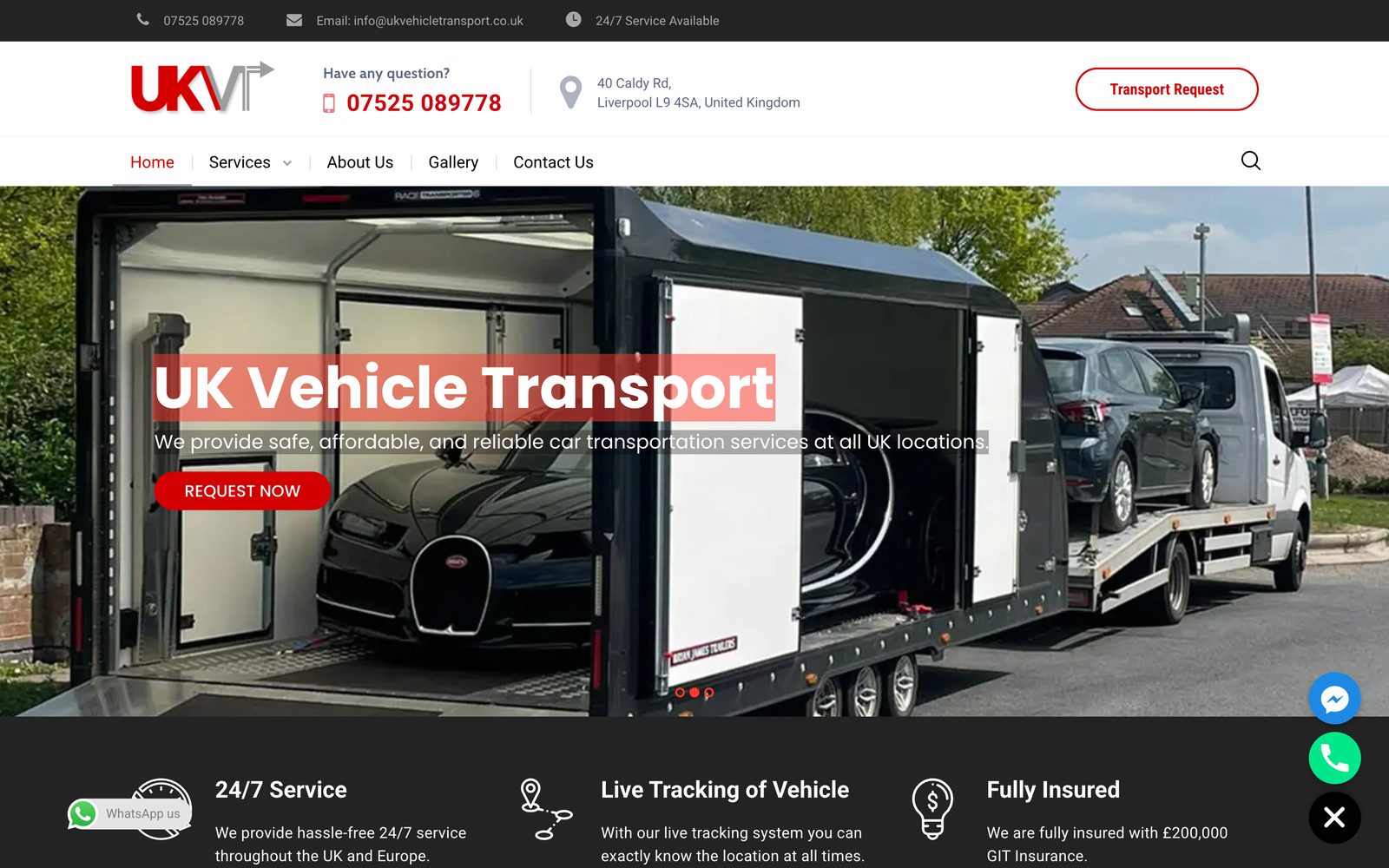
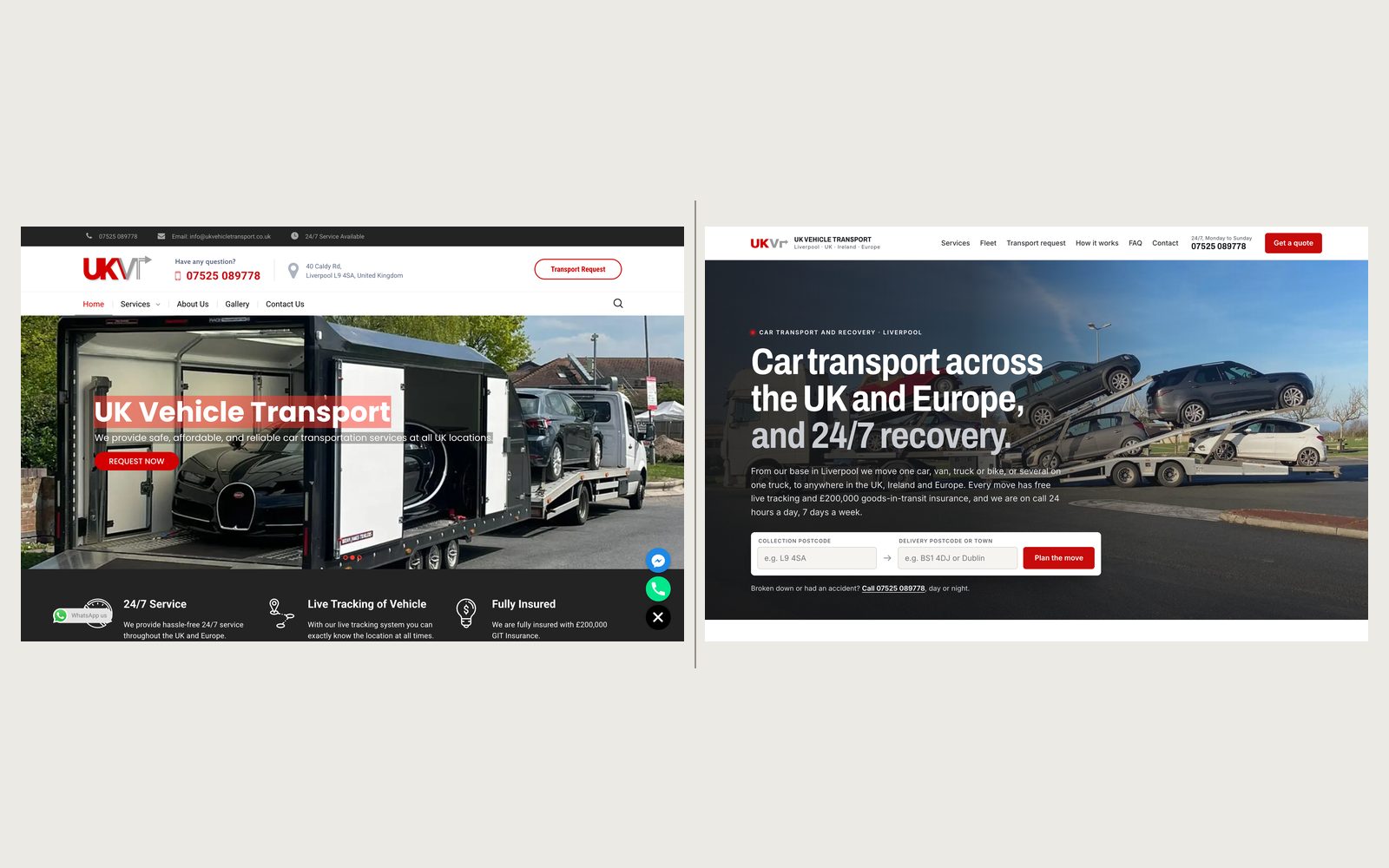
- The first screen is a slider headed "UK Vehicle Transport" or "Multi Vehicle Transport", with the same line about transport "at all UK locations". Ireland and Europe do not appear in the slider.
- The strongest arguments, 24/7 service, live tracking and £200,000 goods-in-transit insurance, sit in a strip below it, at the very bottom of a laptop screen; on a phone, floating chat buttons cover part of the text.
- The request is a pop-up form with one field for the vehicle type and none for a date.
- The vehicle storage page is not linked from the menu or any other page.
- The footer says © 2023, and the About Us page gives 07585 056555 while the header gives 07525 089778.
Decisions
One first screen for both questions
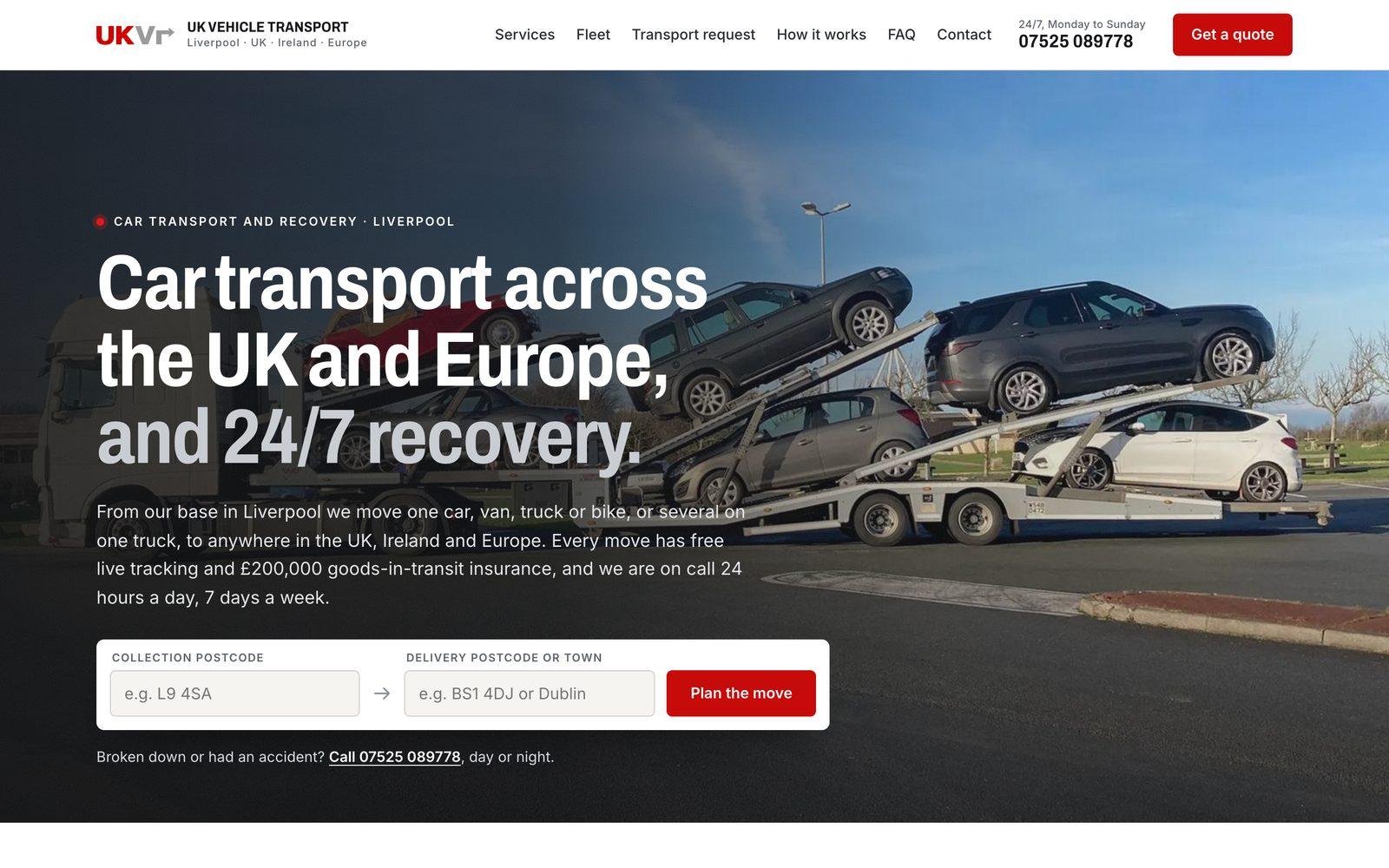
The headline uses their own words: car transport across the UK and Europe, and 24/7 recovery. The sentence below carries the Liverpool base, free tracking and the £200,000 cover. Type L9 4SA into the postcode field and Liverpool appears beside it; "Plan the move" takes both postcodes down to the planner. The last line is the recovery number.
A planner instead of a pop-up
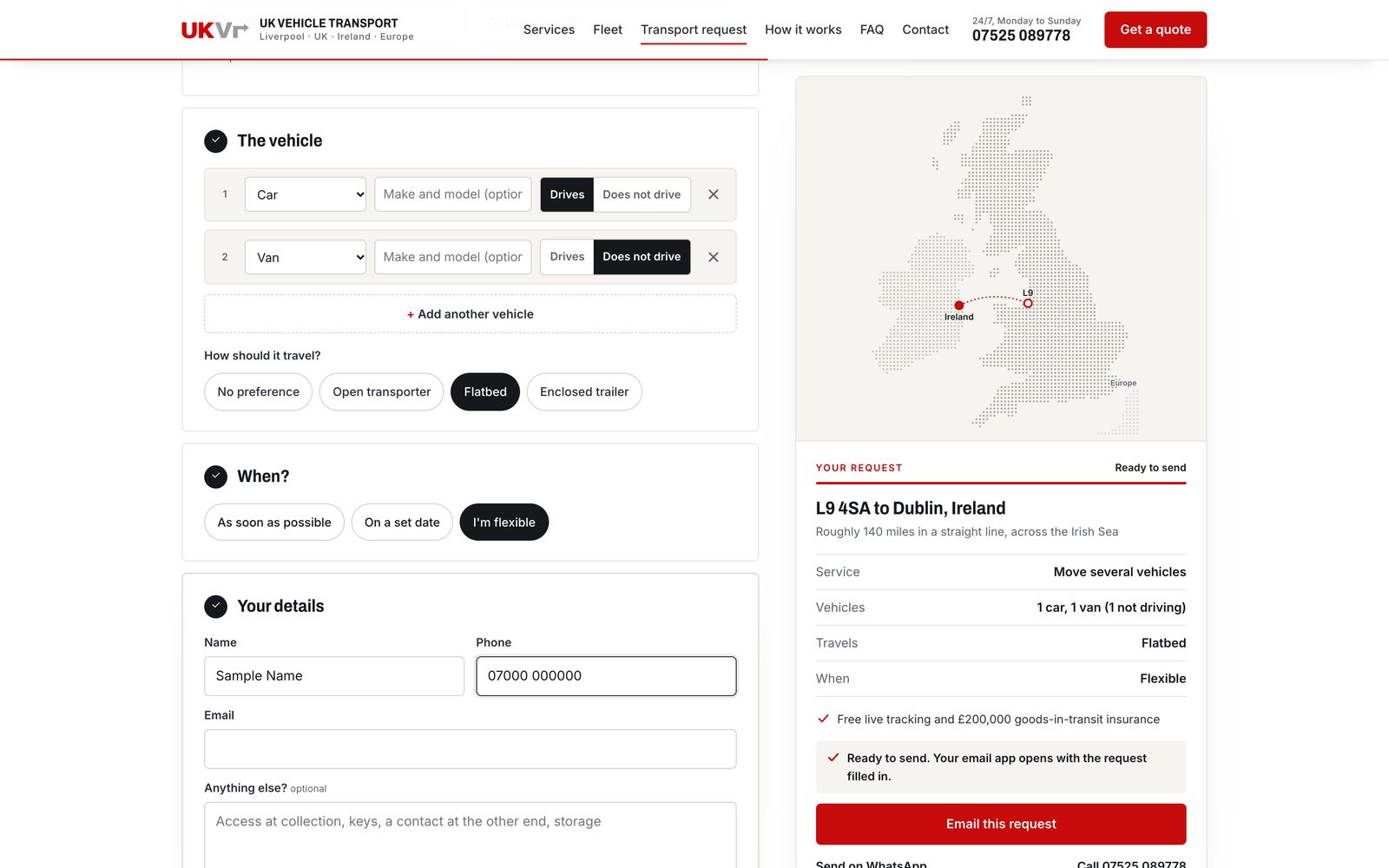
A quote needs a few details, so I set them out in five steps: the service, where from and to, the vehicles and whether they drive, when, and contact details. Add a second vehicle and the service switches to several on one truck. A summary builds alongside, with the route on a map, a rough distance and a sign when the request is ready. The button opens one email to their info@ address with everything filled in, or the same text goes by WhatsApp. For recovery, the planner says a call is quicker and shows the number.
The fleet as technical drawings
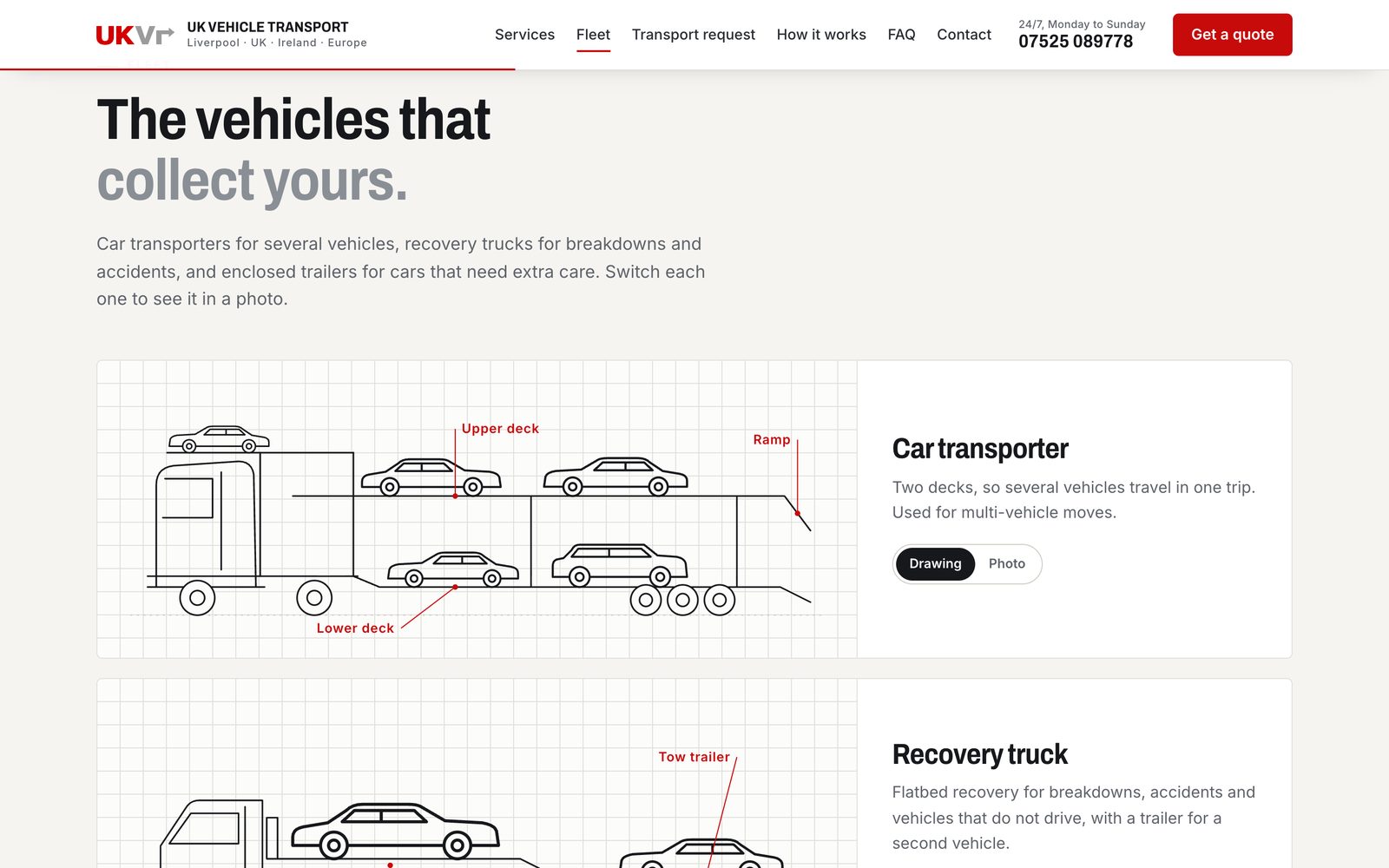
Their photos show a two-deck car transporter, a recovery truck with a trailer and an enclosed trailer. I drew each as a labelled technical drawing that traces itself once, with a switch to their own photo. One colour, the red from their logo, with warm grey and charcoal.
Live tracking, shown
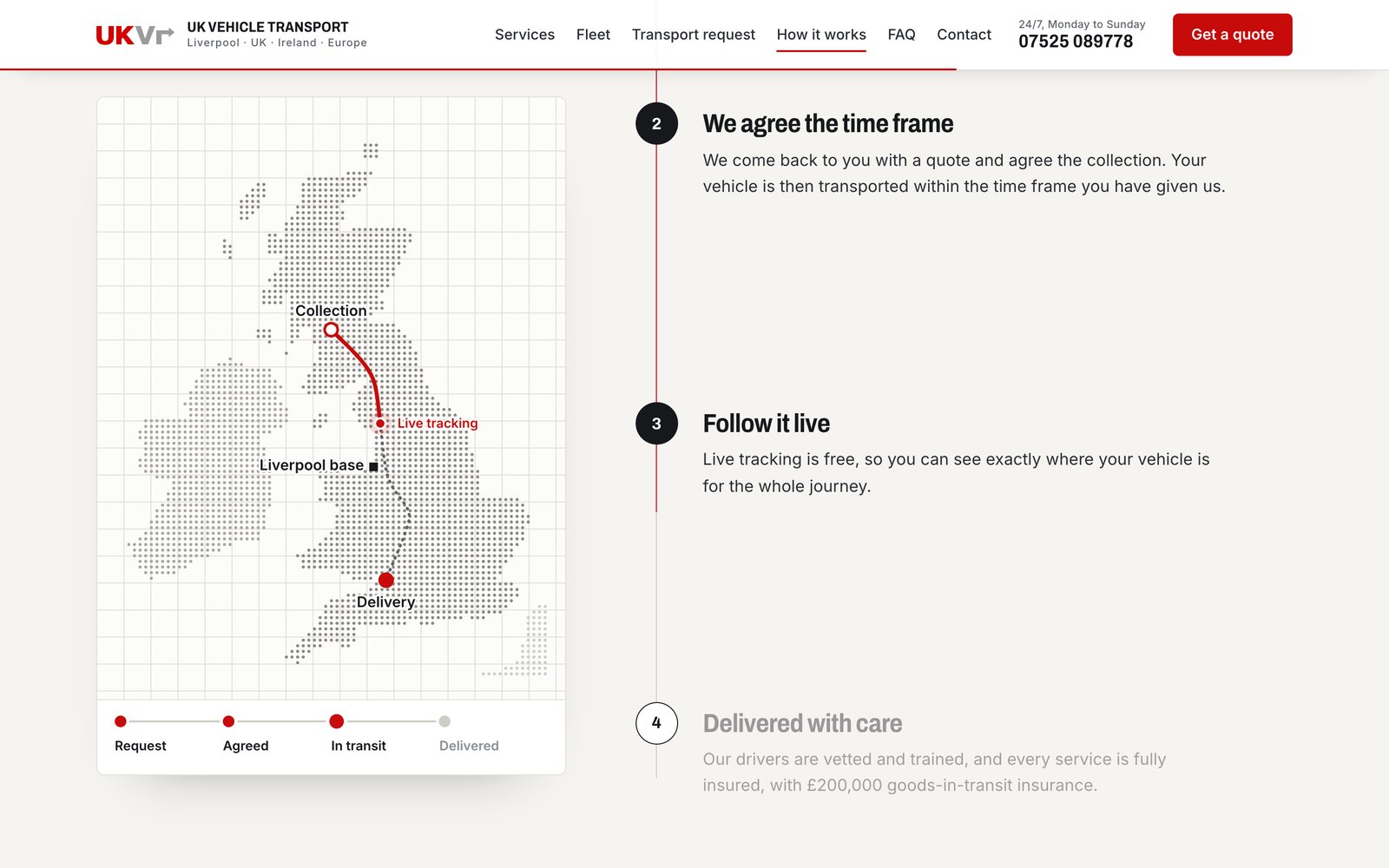
Nobody sees live tracking before booking, so I showed it. Beside the four steps of their process, a map holds still while the page scrolls: collection and delivery appear, then the planned route, then a red line following a "Live tracking" marker, and a tick at delivery. The route is an illustration, with no towns or times I could not back up.
The same story on a phone
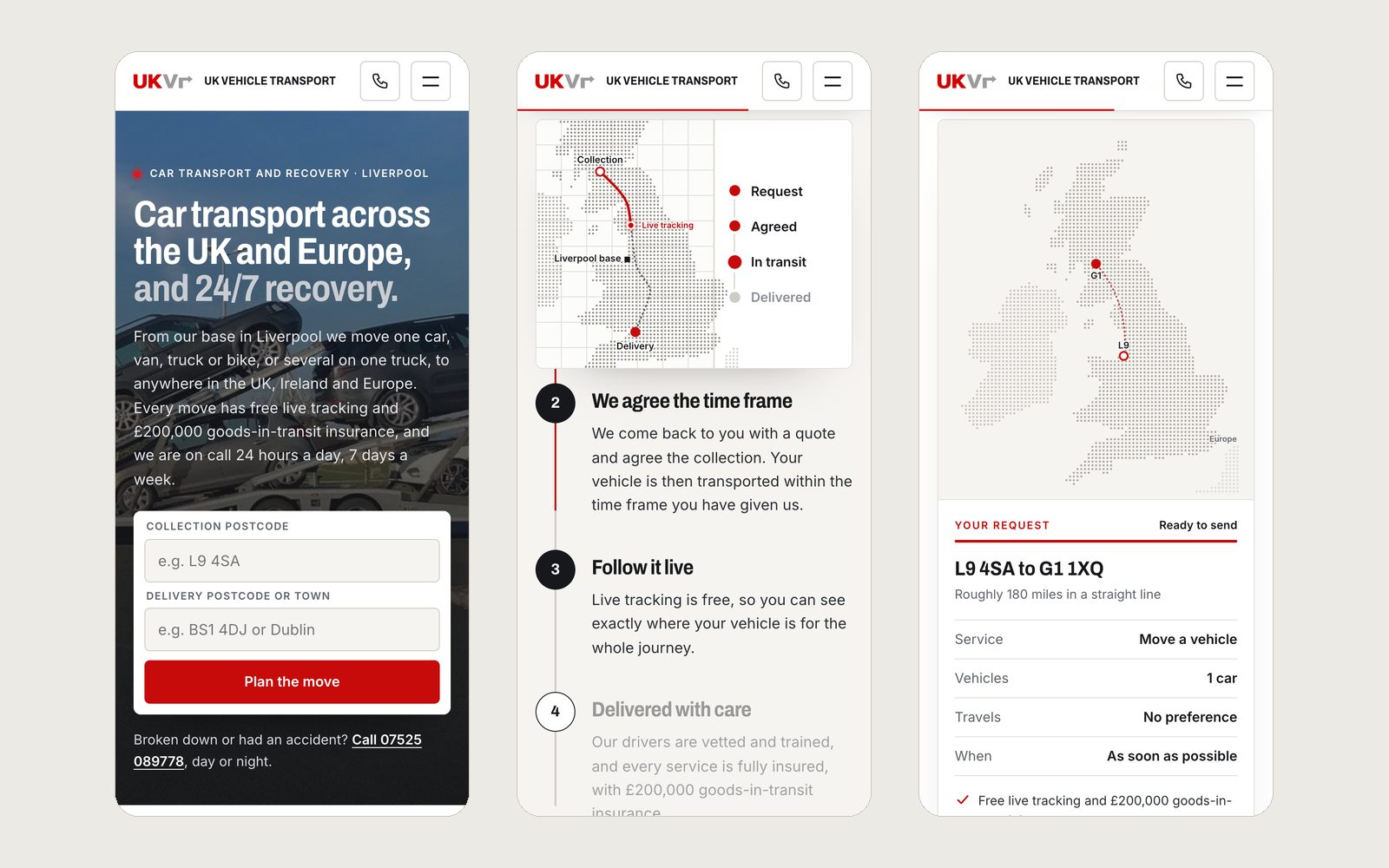
On a phone the header has a call button, and the map stays pinned at the top while the steps scroll beneath it. The planner reads from top to bottom, with the summary at the end.
How it's built
Static HTML, CSS and JavaScript, with no framework or animation library: CSS transitions, IntersectionObserver and SVG. I generated the dot map with a script, and the planner places a postcode at the centre of its area, so distances are approximate and in a straight line. No server sits behind the planner: the request is assembled into a mailto link. The page is noindex (meta tag, robots.txt and a response header), and the LocalBusiness and FAQ data hold only what is on their site and at Companies House. Everything reads without JavaScript, reduced motion switches the animation off, and the photos are their own, resized, with fixed dimensions and lazy loading.
What I would do next
I would first check with them which number is the main one, whether they still offer storage and enclosed transport, and where requests should land. A real project would also store each request on a server with a confirmation to the customer, and redirect the old page addresses to the new sections.