Lea Gobo
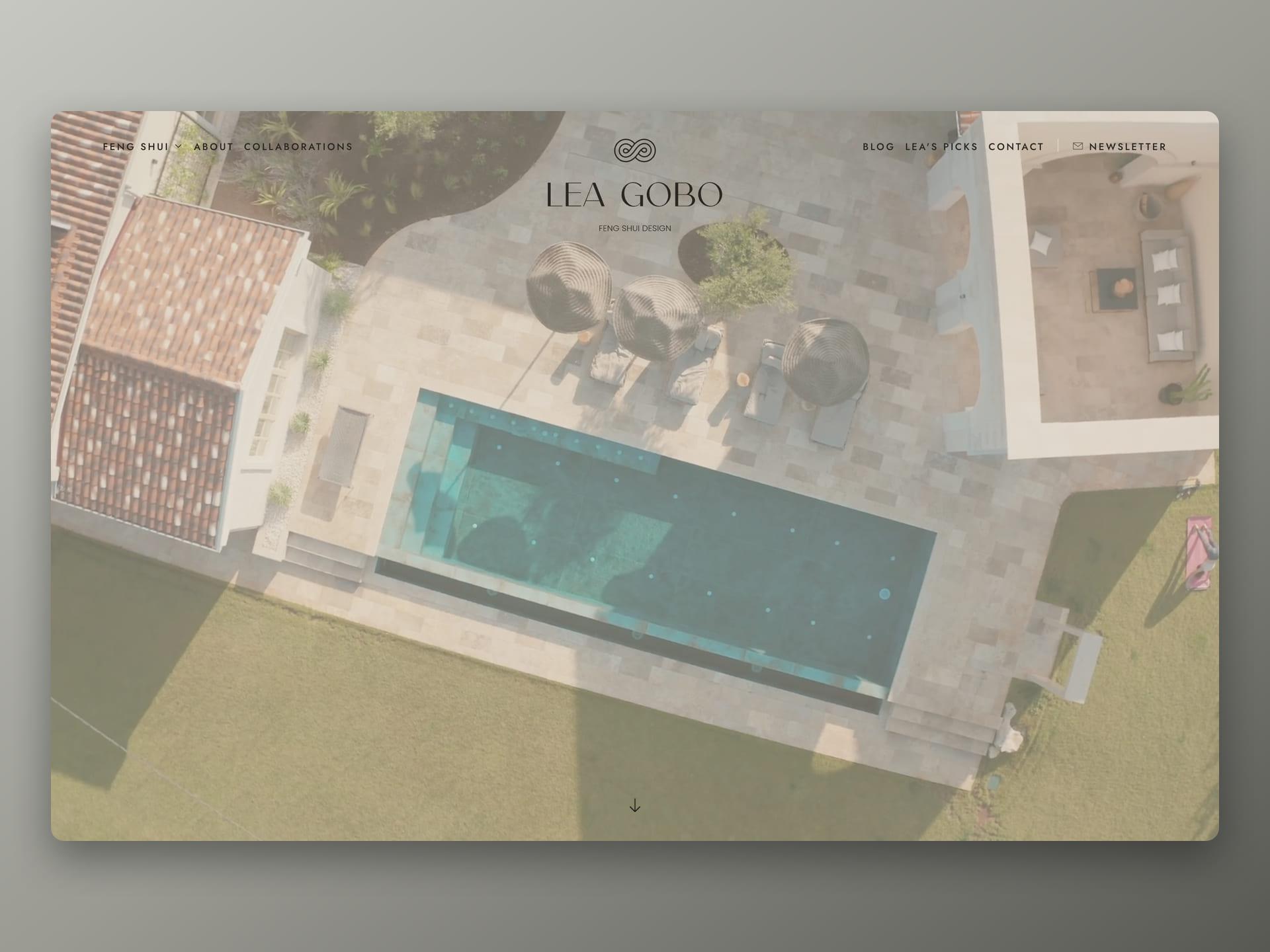
Preview Live siteA bilingual website for a feng shui consultant, with its own brand system and a CMS in which Lea edits everything a visitor sees herself.
- Client
- Lea Gobo
- Service
- Website, brand system and CMS for a feng shui consultant
The idea
Lea Gobo is a feng shui consultant. She works with private homes and business premises, and with architects and interior designers. Her offer now rests on one thing, so the website had to be one thing too: a showcase, not a catalogue. A visitor should first feel the space, the light and the calm, and only then ask how to work with Lea. So there is no hard selling, and the only step the site asks for is a 15-minute call.
The second part of the brief mattered just as much: who looks after the website after launch. I wrote the first texts from the context of our conversations, and Lea edits them from there: copy, photographs, articles, recommendations and call times, without phoning me about every sentence. The previous site ran on WordPress, with Elementor and Polylang. The new one is custom, with a CMS built into the same project.
The build
Brand before website
Before the first page I built a brand system: colours, typography, a logo with its descriptor, rules for photography and tone. Lea reviewed it on 22 September and only then did the build start. That is why the website specification was one document instead of a hundred questions: every decision about colour, spacing and typeface had already been made.
The website
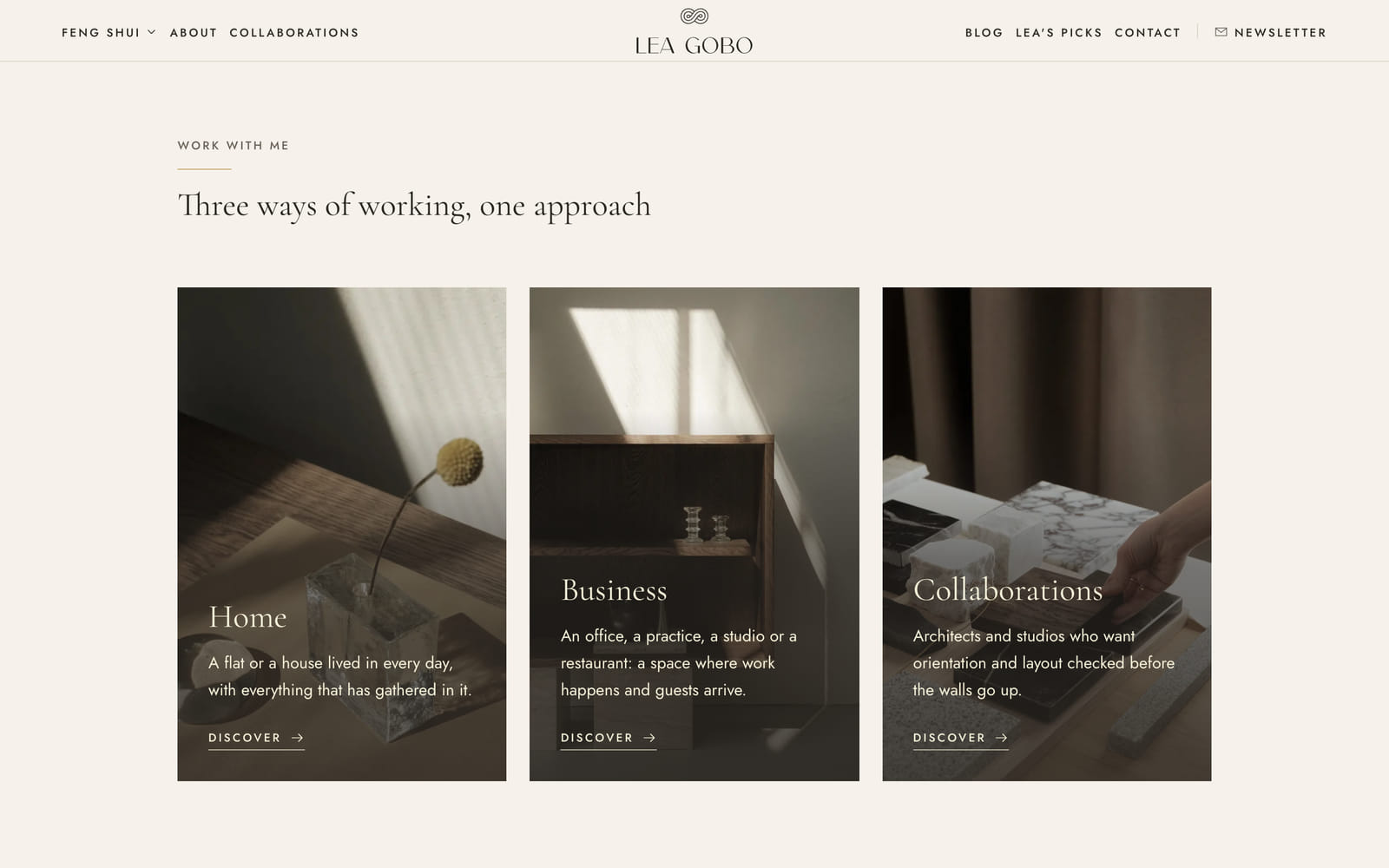
The homepage runs in this order: a video on the first screen, a short introduction, cards for Home, Business and Collaborations, client experiences, a strip of the publications that have featured Lea, the blog, her book recommendations and contact. The service pages are assembled from the same parts, so they read the same way.
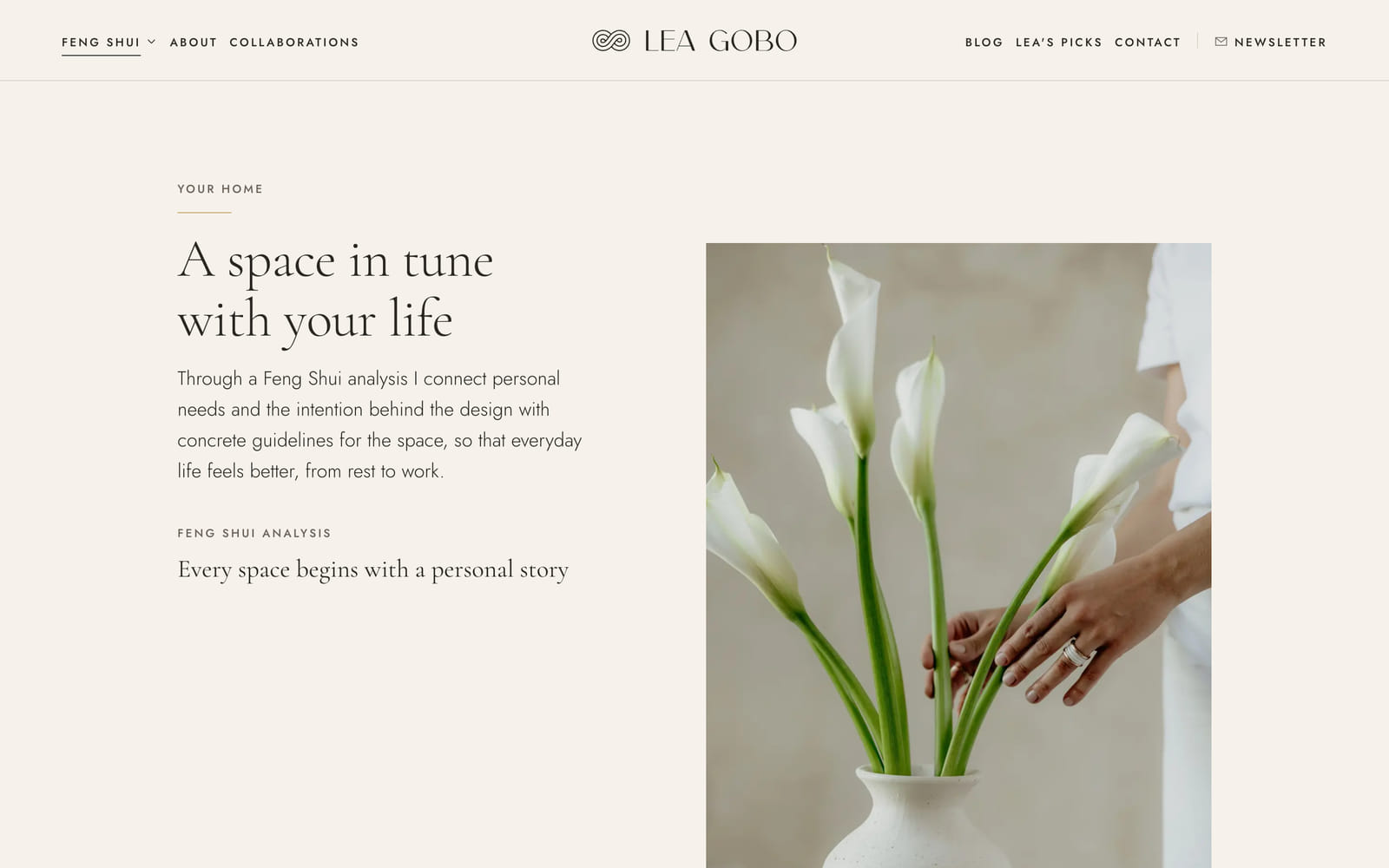
The website exists in Croatian and English. Both versions live in one document, so Lea can see in the CMS what has been translated and what has not. Whatever is not translated does not appear in that language. A 15-minute call is booked on the page itself: the calendar is connected to her Google Calendar, never offers busy times, and each call gets a Google Meet link. Lea sets her working hours and days off herself.
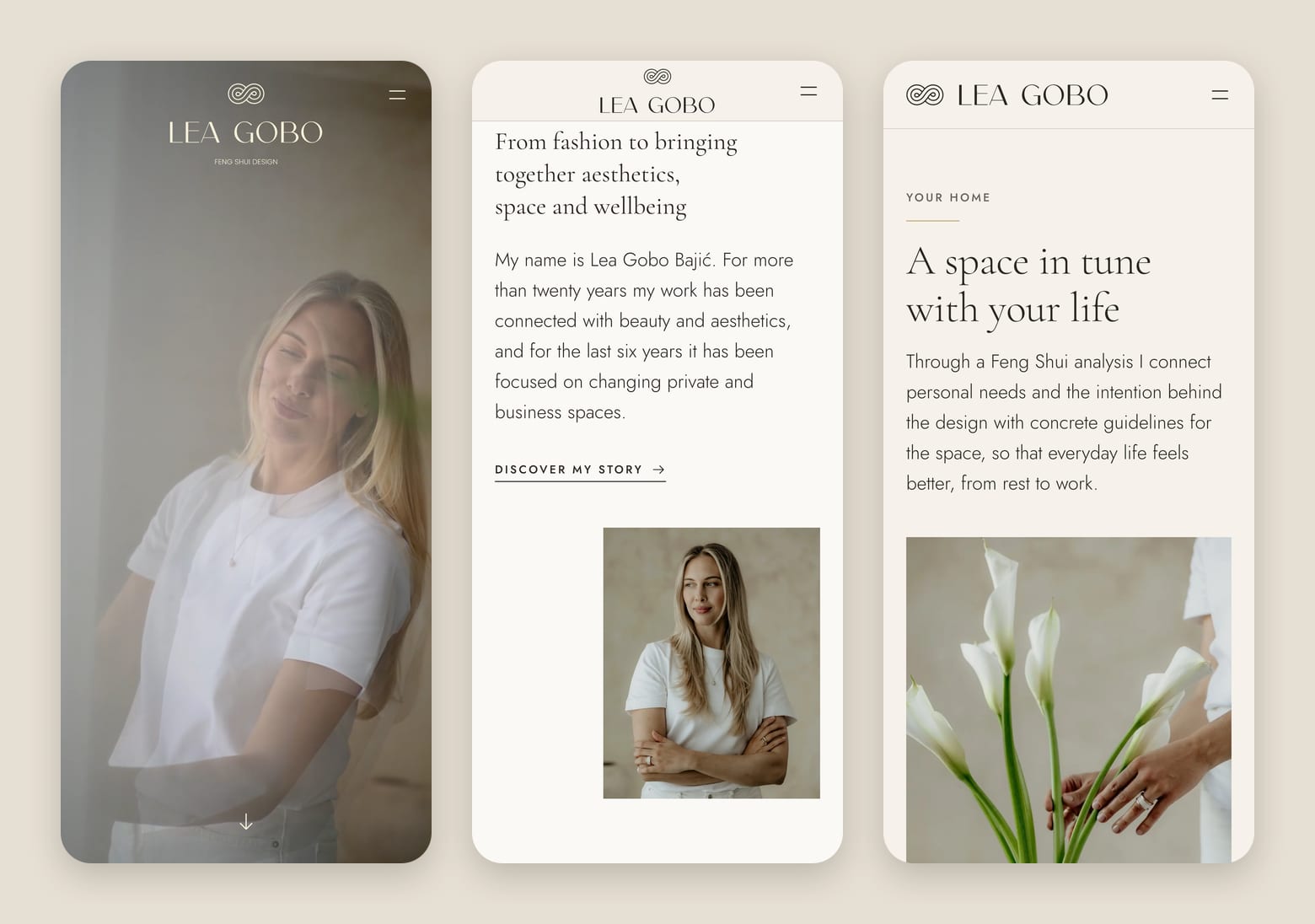
The first screen has a video with a separate portrait version for phones. Lea edits the video and its options (clip, overlay, sound) herself in the CMS, so she can swap it whenever she likes. Everything technical, such as pausing off screen, muted autoplay and a still photograph for visitors with reduced motion, is handled by the code.
A CMS Lea actually uses
The CMS is Payload, built into the same project rather than run as a separate service: one repository, one database, which also makes the handover simple. The interface is light, in Croatian, and organised around the website rather than around a database. Lea gets:
- live preview beside the form: clicking text in the preview opens the field that edits it,
- drafts, revision history and a trash, and restoring an older version always lands in a draft, never straight on the live site,
- text position per section (left, centre, right or hidden) instead of free layout, so the design cannot be broken,
- a "Website texts" page for everything outside the sections: buttons, error messages, the 404 page and the publications strip, in both languages,
- SEO fields with character counters and a preview of how the result looks in Google,
- the menu and footer, the blog, recommendations with books, the "In the media" strip and a list of newsletter signups with a CSV export,
The process
Requests, updates and questions went through the client portal. Lea's changes arrived as PDFs with a numbered list of points per page, and I carried each one into a change log and made it in both languages. Lea has edited content herself since 6 October, so before changing anything in the CMS I check whether she has an unpublished draft and touch only the fields the change needs. The first review with her on 30 September passed on direction, colours and typeface, but not on structure: there was too much content and too many photographs of her. We shortened the pages and rearranged the homepage.
Decisions and lessons
A CMS in the same project, not WordPress. A design made of fields per section cannot be broken by a misplaced block, and Lea is not responsible for core, theme and plugin updates. The price is that I had to build what WordPress has ready-made: a trash, revision history, drafts.
Analytics without cookies. So there is no consent banner either.
No invented destinations. Pages from the old site that no longer have a counterpart (services Lea no longer offers) return 404, and the rest are redirected to the closest content. Every photograph in the imported articles was checked by hand, because what Lea no longer offers can survive in a picture.
Formal address in Croatian. In Croatian I normally address readers informally, but Lea's audience expects a more formal tone, so the whole Croatian website uses the formal "Vi". The English one speaks to the reader as a plain "you". A test enforces the rule, not memory.
What went wrong. Every visible string has to be editable from day one. Some text lived only in code, so Lea asked why she could not change what I had changed. I fixed it with a "Website texts" page, and the rule now applies from the start of every project.
The result
- A bilingual website with its own brand system, launched on 19 October 2026, a month after the first conversation on 18 September.
- Lea edits copy, photographs, articles, recommendations, the menu, SEO fields and call times herself, without phoning me.
- The design stays in place: she chooses text position among variants I have checked, not a free layout.
- A 15-minute call is booked on the page, straight into her calendar.
I give no traffic or enquiry figures because there are none yet: the website went live only on 19 October.