Staklo Iviček
Open the conceptA concept for a Zagreb glazier: customers enter their sizes, see a dimensioned drawing of the glass and send an enquiry that is ready for a quote.
Staklo Iviček is not my client and did not commission this website. I made the concept on my own initiative from the text and photos on their public website, so every fact on it is theirs.
- Page weight
- 1.26 MB → 0.20 MB
- Requests on load
- 79 → 20
- Fits a phone
- No → Yes
- Main content on a phone
- 3.8 s → 1.3 s
Measured in Chrome on 14 November 2026: phone, throttled 4G and CPU, no cache, median of three runs. Current website first, concept second.
- Company
- Staklo Iviček
- Service
- Concept website and made-to-measure glass planner
Staklo Iviček is a glazier in Šestine, Zagreb, founded in 1994. They cut, process and fit every kind of glass, from kitchen splashbacks to glass doors and balustrades. Customers usually arrive with a wall or an opening and one question: which glass goes here, and what do they need to send for a quote?
What I found
Checked on 14 November 2026, on a laptop and a phone:
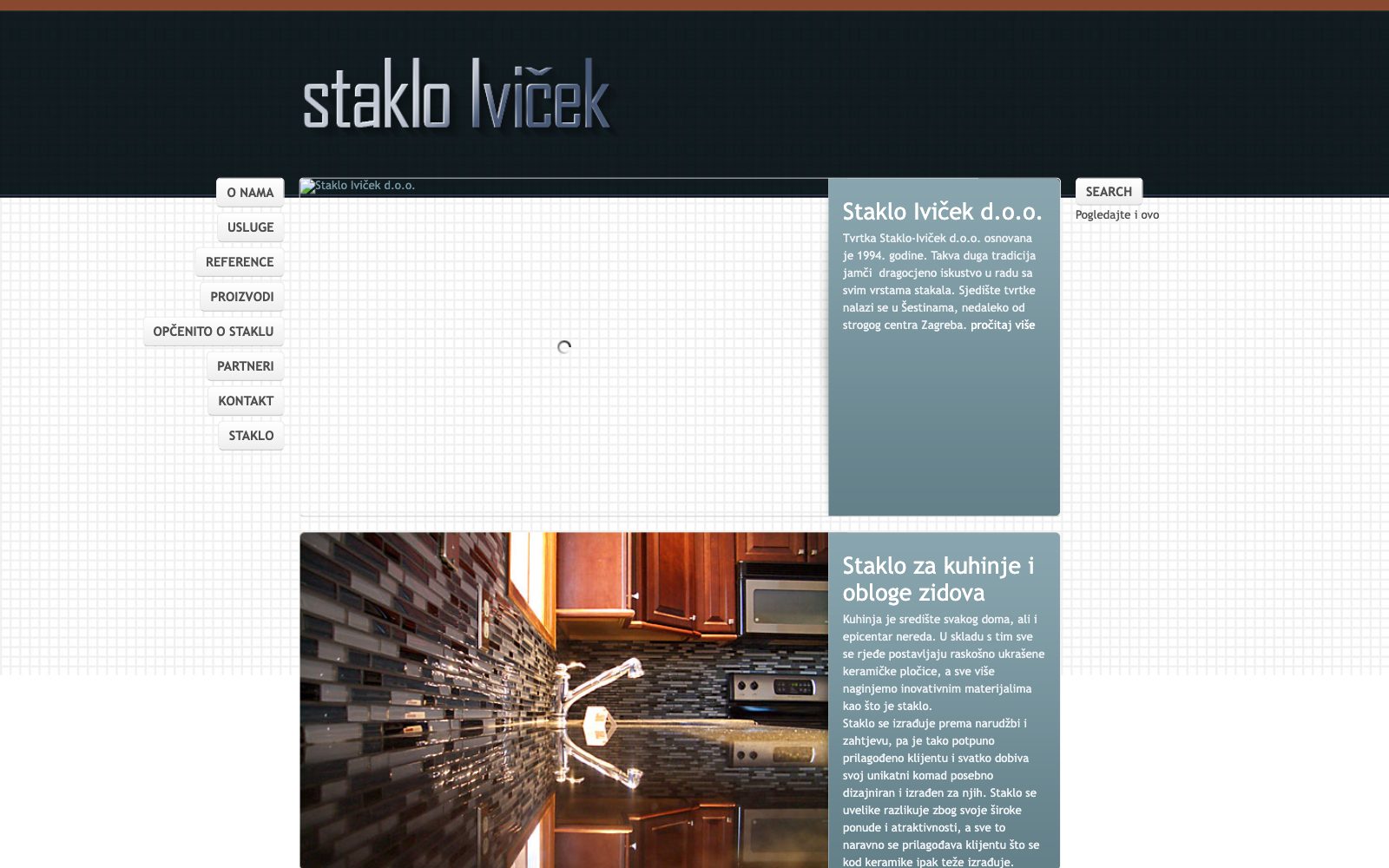
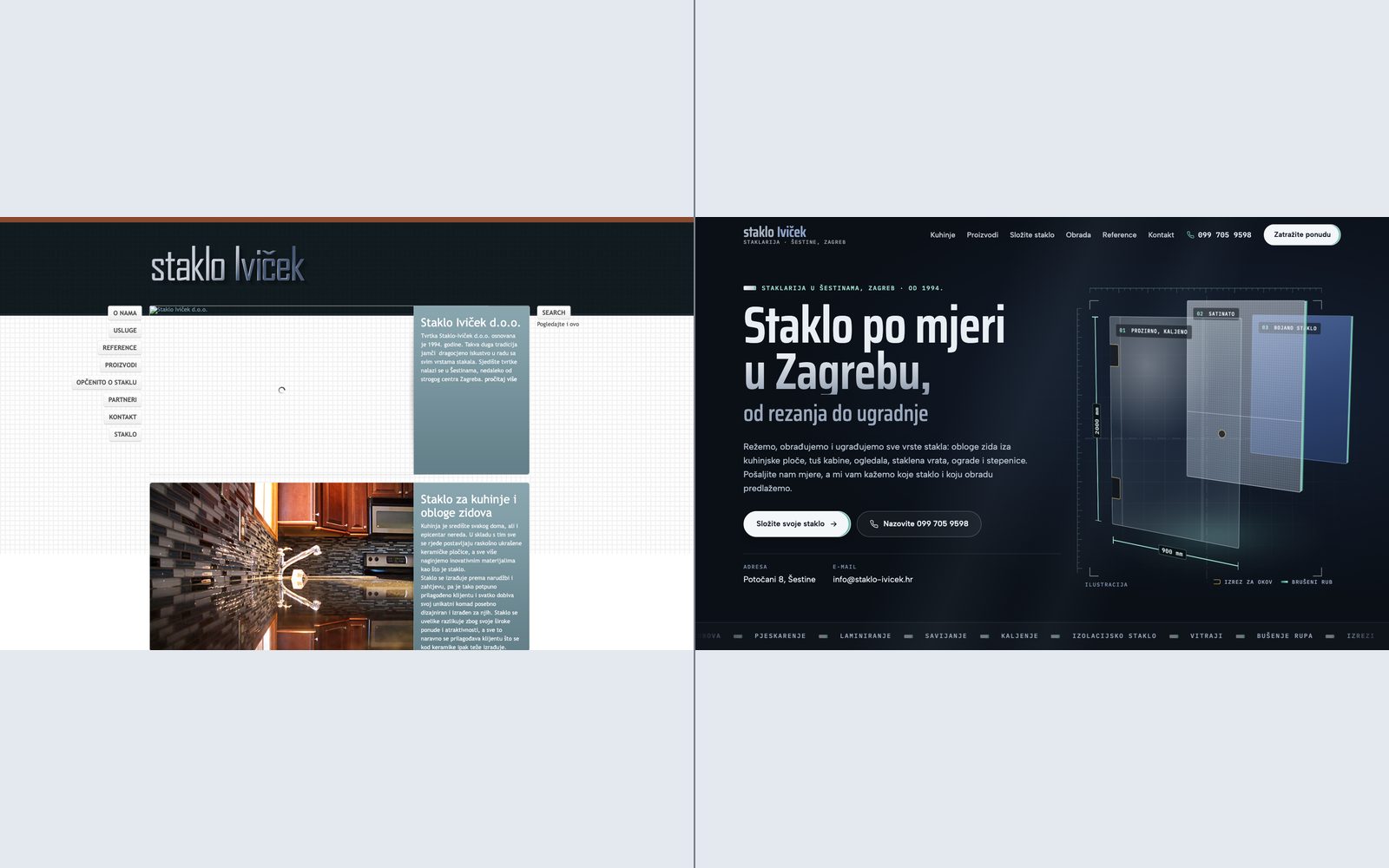
- The pages have no mobile viewport tag, so a phone shows the 980 px desktop layout shrunk to 40 %, so 12 px text ends up under 5 px.
- The homepage is a list of blog posts. The first dates from February 2011, the second, on kitchen glass, from October 2013, and the footer reads 2011.
- Phone and email are plain text at the foot of the About page. No page I opened has a tappable number, and Contact is a form with no phone or address.
- What an opening needs before a glass door goes in sits in one long paragraph of a post called "Vrata – razna": five checks a customer can do alone.
Decisions
Made-to-measure glass in the first line
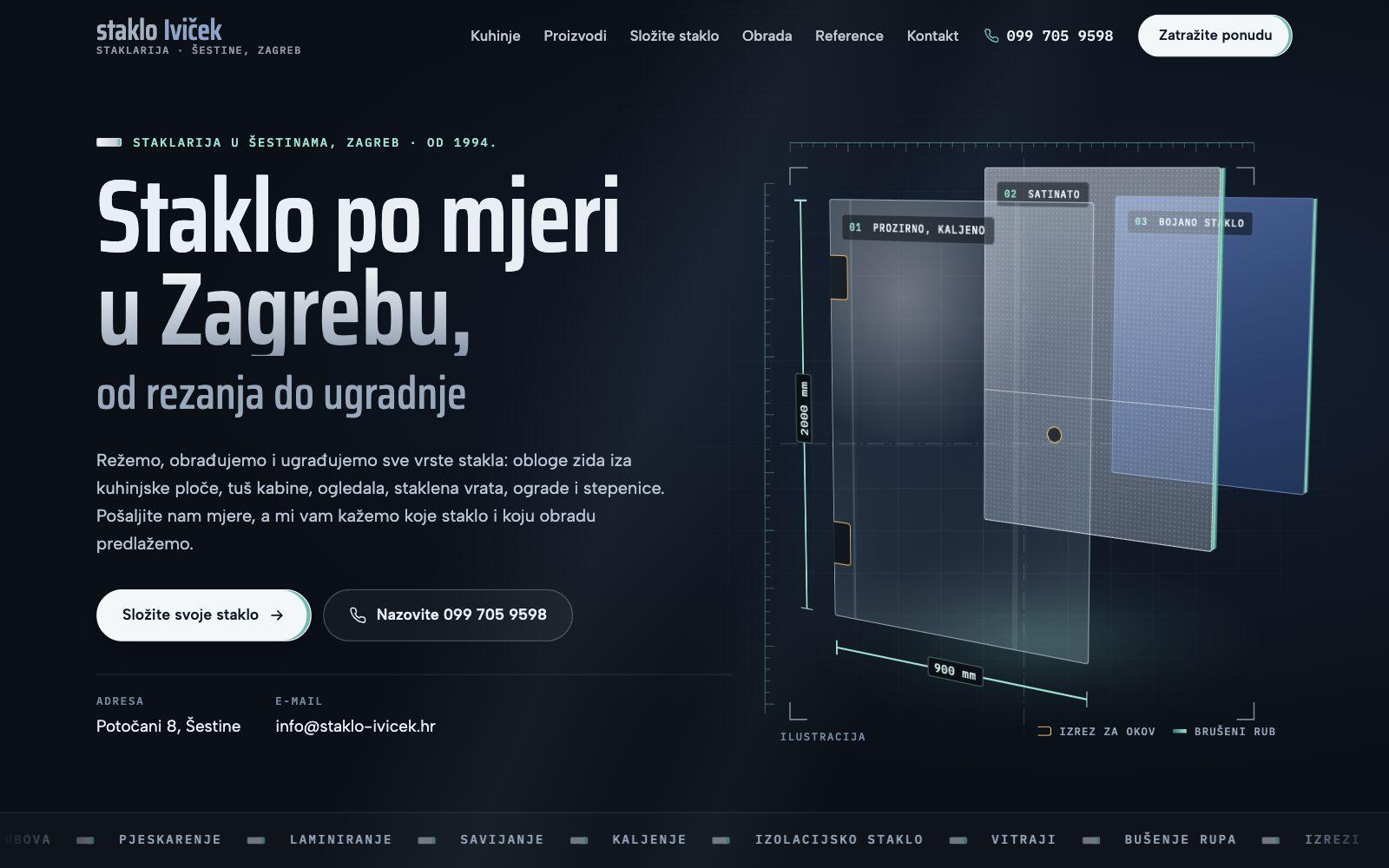
The headline says what people are looking for: "Staklo po mjeri u Zagrebu, od rezanja do ugradnje", glass made to measure in Zagreb, from cutting to fitting. Below it are two ways in: build your glass, or call.
Glass drawn rather than photographed
With no photographs of their own work, the first screen is an illustration of three panes in space, clear toughened, satin and painted, with dimensions, a cut-out for a fitting, a drilled hole and a ground edge. Behind them a ruler and centre lines draw themselves once, then everything stays still. Colours come from the logo, silver grey and steel blue, with the green of a glass edge as the one accent. The drawings on the page are labelled as illustrations.
A tool that asks what a glazier would ask
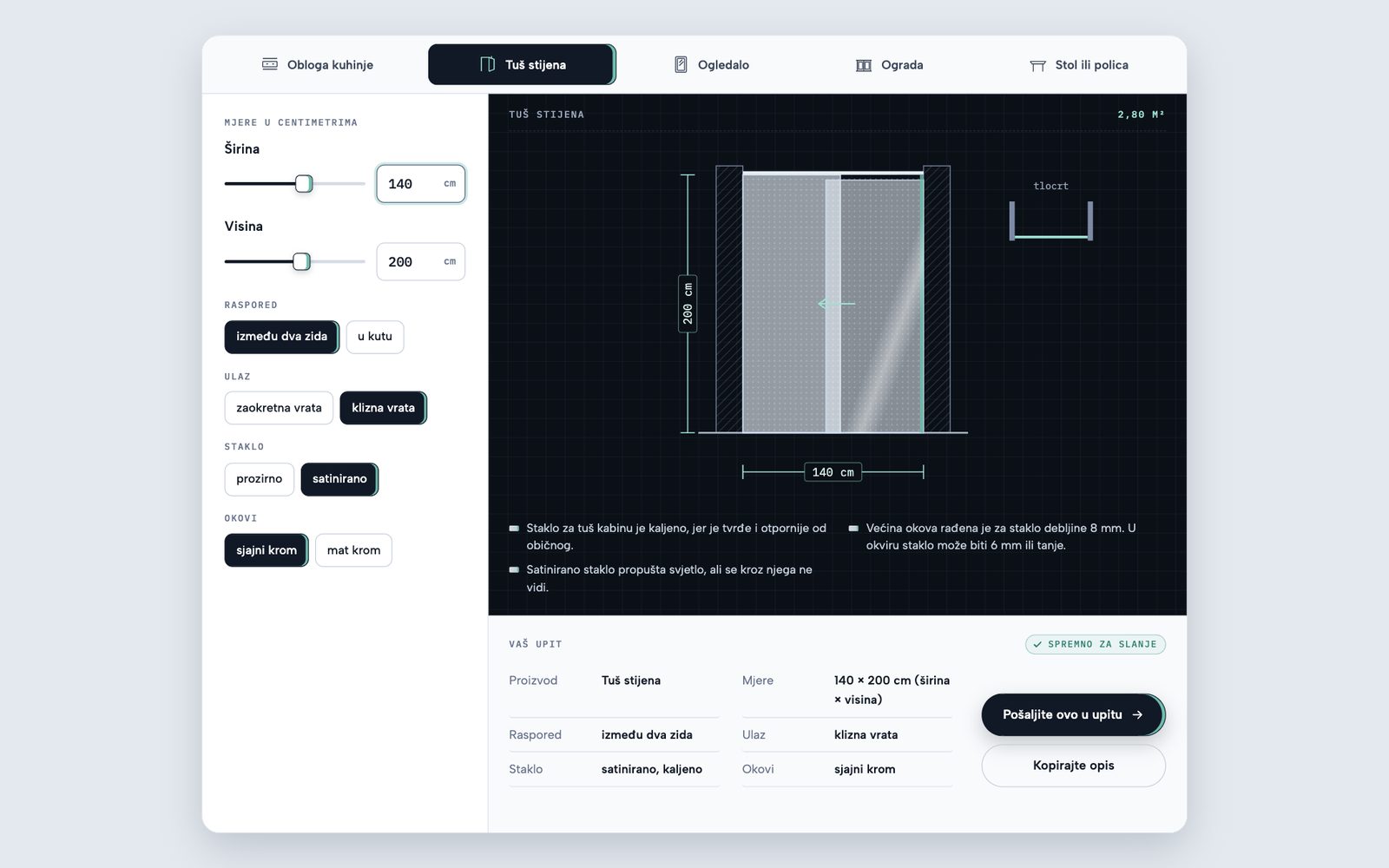
"Složite svoje staklo" covers five products: a kitchen splashback, a shower screen, a mirror, a balustrade and a table top or shelf. The customer types the sizes and picks the glass, edge, holes or fittings, and the dimensioned drawing follows. Notes from their own articles sit underneath, such as balustrade glass being laminated and toughened, at least 8 mm. The enquiry summary builds as they choose. One click copies it into the enquiry form, from where it goes as an email to info@staklo-ivicek.hr. There is no price, as they do not publish one.
The order of work as one story
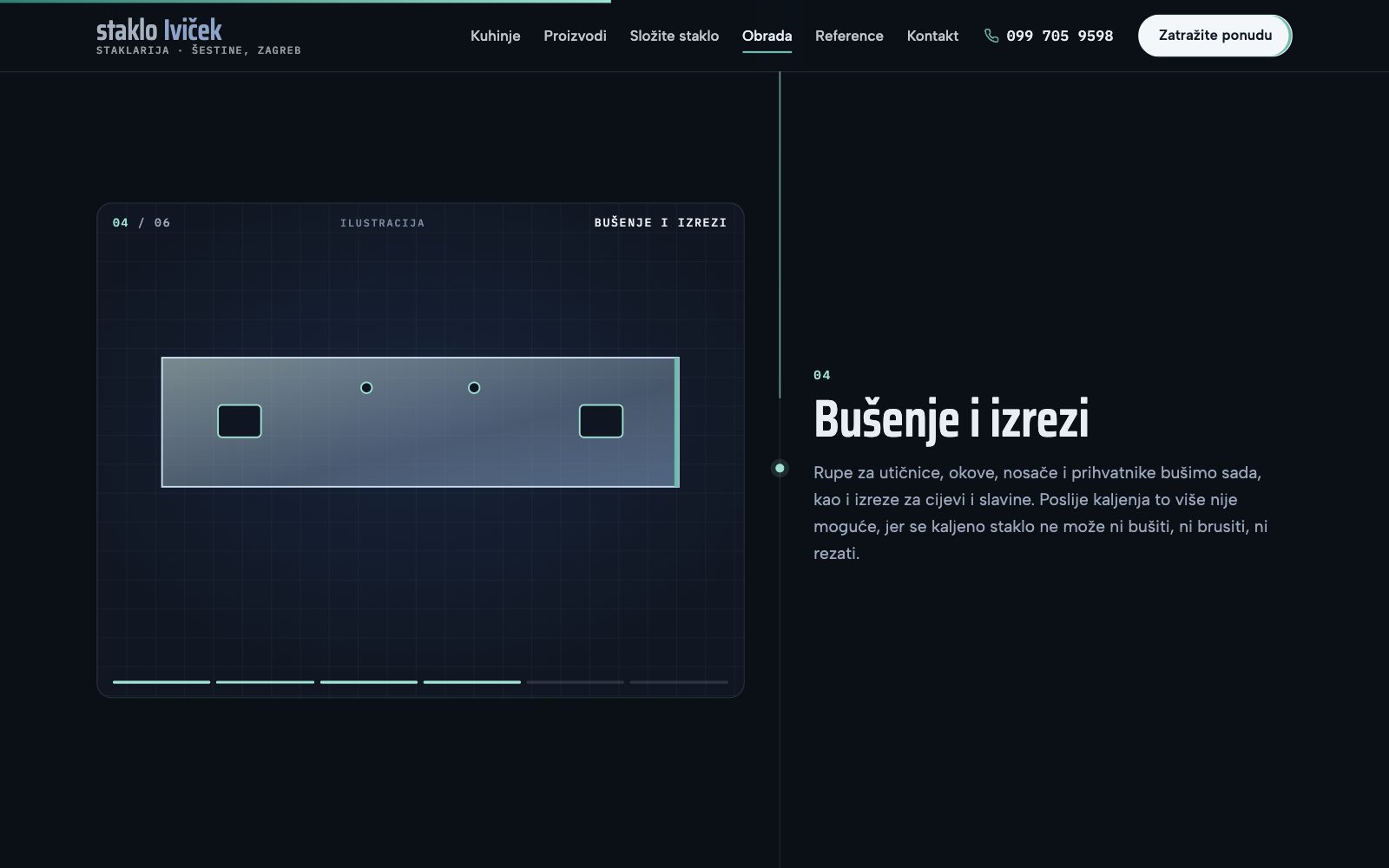
On the current site the processes are a list of words, but a customer needs the reason for the order: once glass is toughened it can no longer be drilled or cut. So processing became six steps, from measuring to fitting, with one pane travelling through a drawing that stays put while the steps scroll past.
A paragraph about doors became a checklist
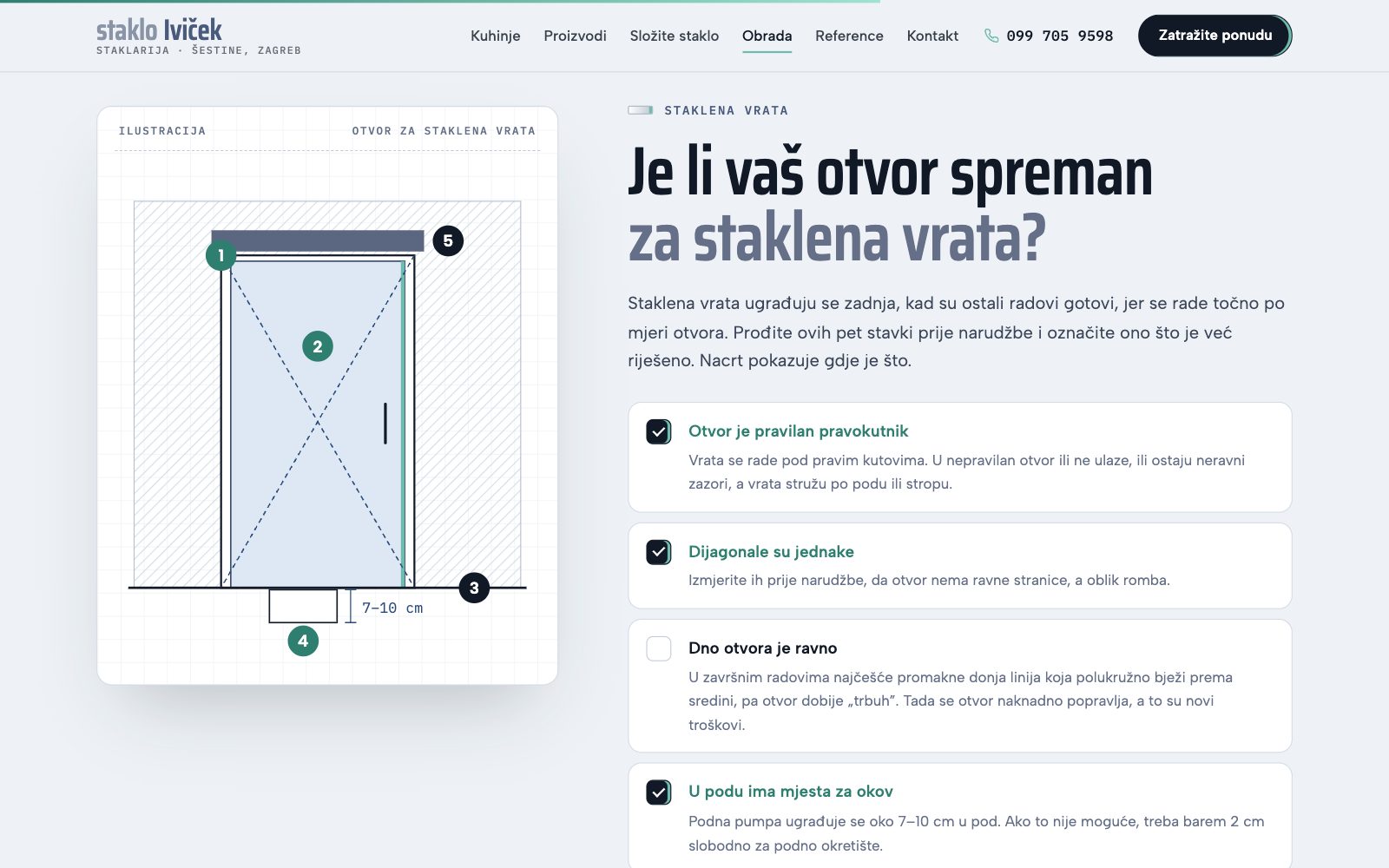
I turned the five points from "Vrata – razna" into a checklist beside a drawing of the opening: square corners, equal diagonals, a level bottom, room for the floor spring and a support in the ceiling. Each ticked item turns green on the drawing, and the state of the opening can be sent with the enquiry.
On a phone
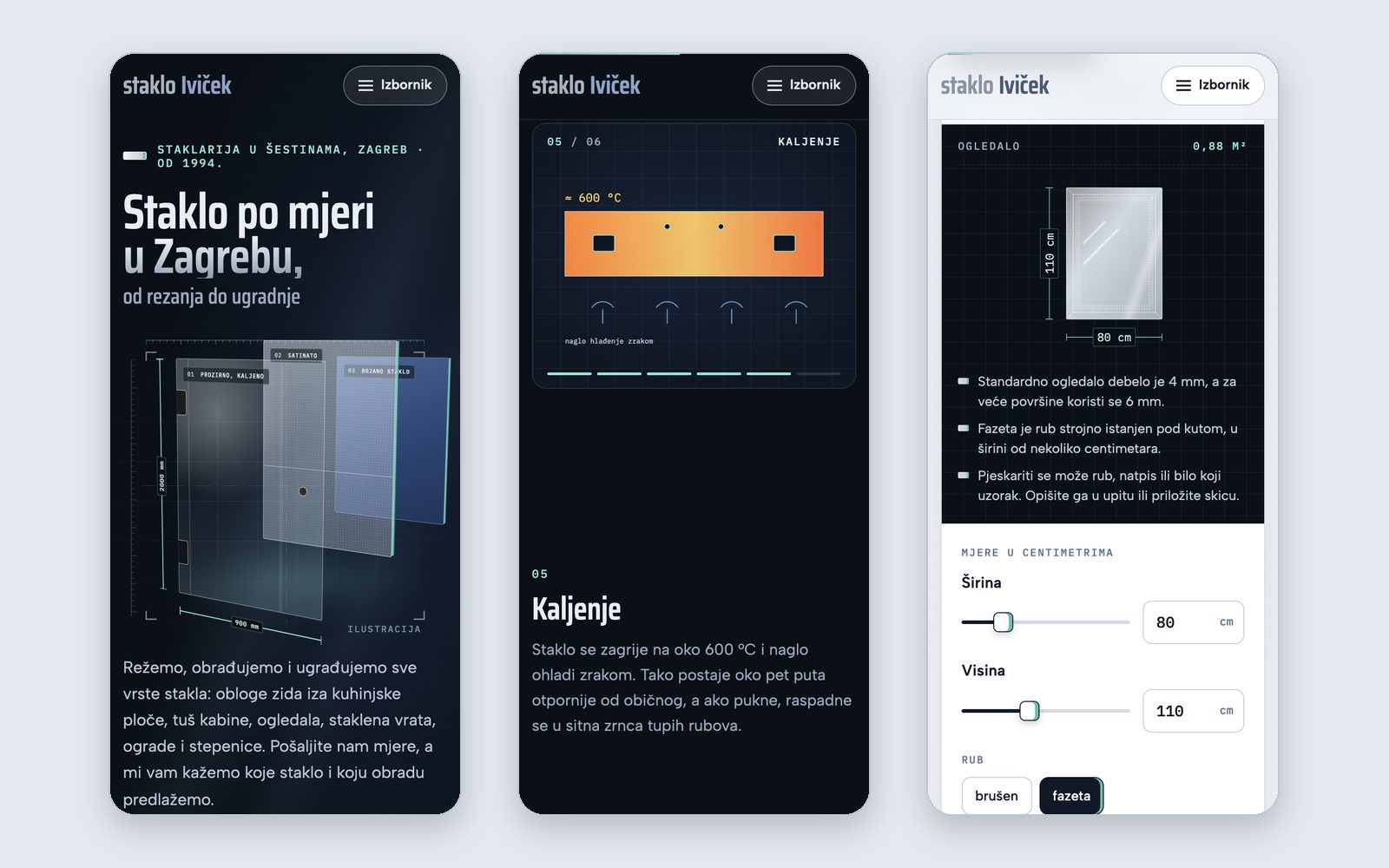
On a phone the processing drawing stays at the top while the steps scroll beneath it, and in the tool the drawing comes before the fields.
How it's built
Static HTML, CSS and JavaScript, no framework. The hero panes are CSS 3D, the drawings hand-written SVG, and the tool's drawing is generated from the measurements. Hidden starting states are set only once JavaScript has loaded, so without it the whole page is visible, and with reduced motion there is no animation. The tool has no server: the enquiry leaves through mailto. The page is set to noindex, the JSON-LD holds only details from their own site, and old article addresses redirect to the matching sections.
What I would do next
First I would check whether the 2011 reference list still stands, whether the landline works and whether they toughen and laminate in house. A real project would add photographs of their own work, a form that takes photos of the wall without the customer's email program, and opening hours, which the site does not give today.