Onboard Corrugated Limited
Open the conceptA sheet feeder's website led by its corrugators: flutes drawn to caliper, a sheet enquiry that checks the width, and the board's route from reel to truck.
Onboard Corrugated Limited is not my client and did not commission this website. I made the concept on my own initiative from the text and photos on their public website, so every fact on it is theirs.
- Page weight
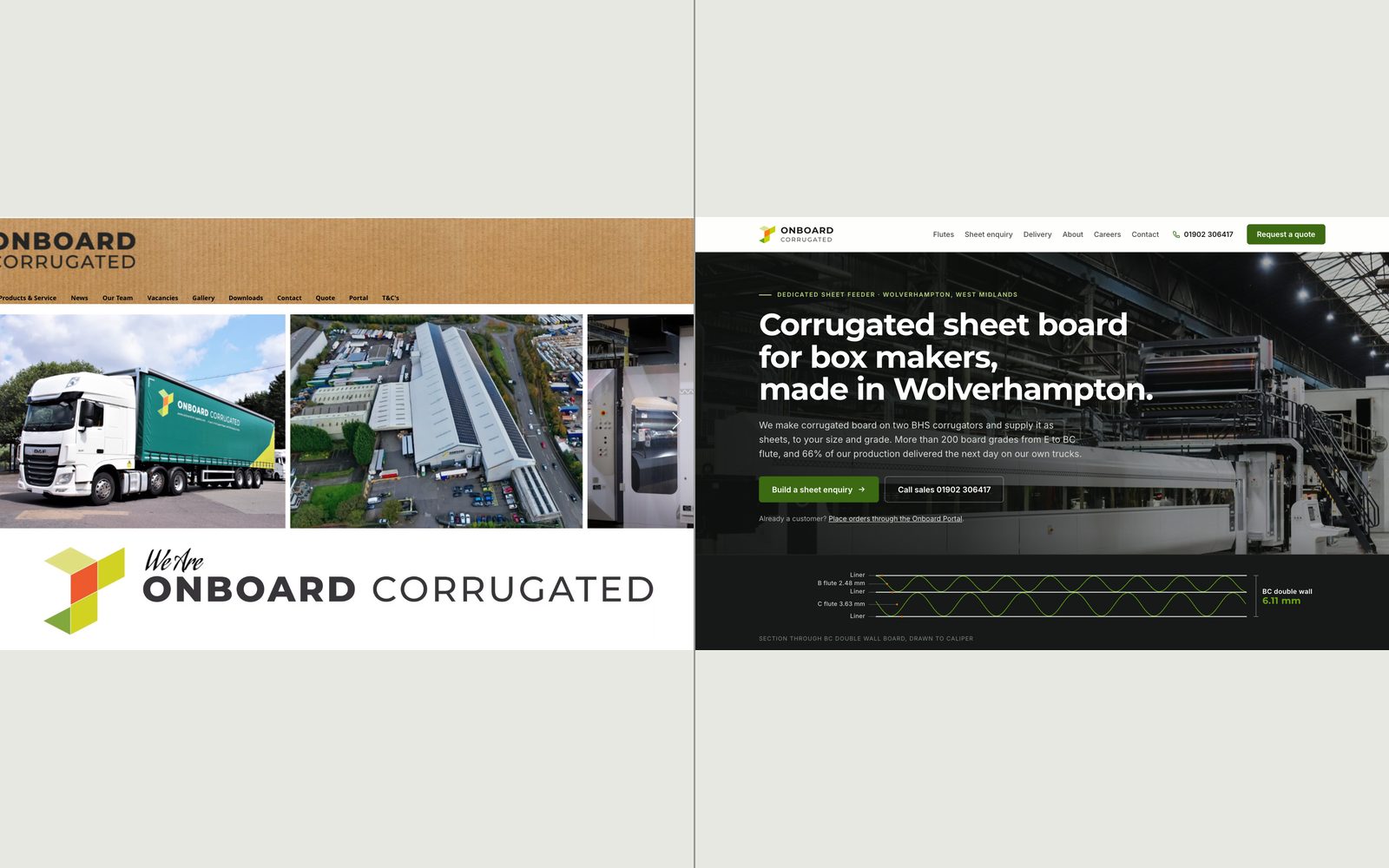
- 2.53 MB → 0.76 MB
- Requests on load
- 166 → 11
Measured in Chrome on 14 November 2026: phone, throttled 4G and CPU, no cache, median of three runs. Current website first, concept second.
- Company
- Onboard Corrugated Limited
- Service
- Concept website, sheet enquiry tool and careers section
Onboard Corrugated Limited is a dedicated sheet feeder in Wolverhampton: since 2010 it has made corrugated board on two BHS corrugators and supplied it as sheets to box makers. Their buyer wants to know two things: does Onboard run the flute and size I need, and how soon does it arrive.
What I found
I went through the site on 14 November 2026, on a 1440 px laptop screen and on a phone:
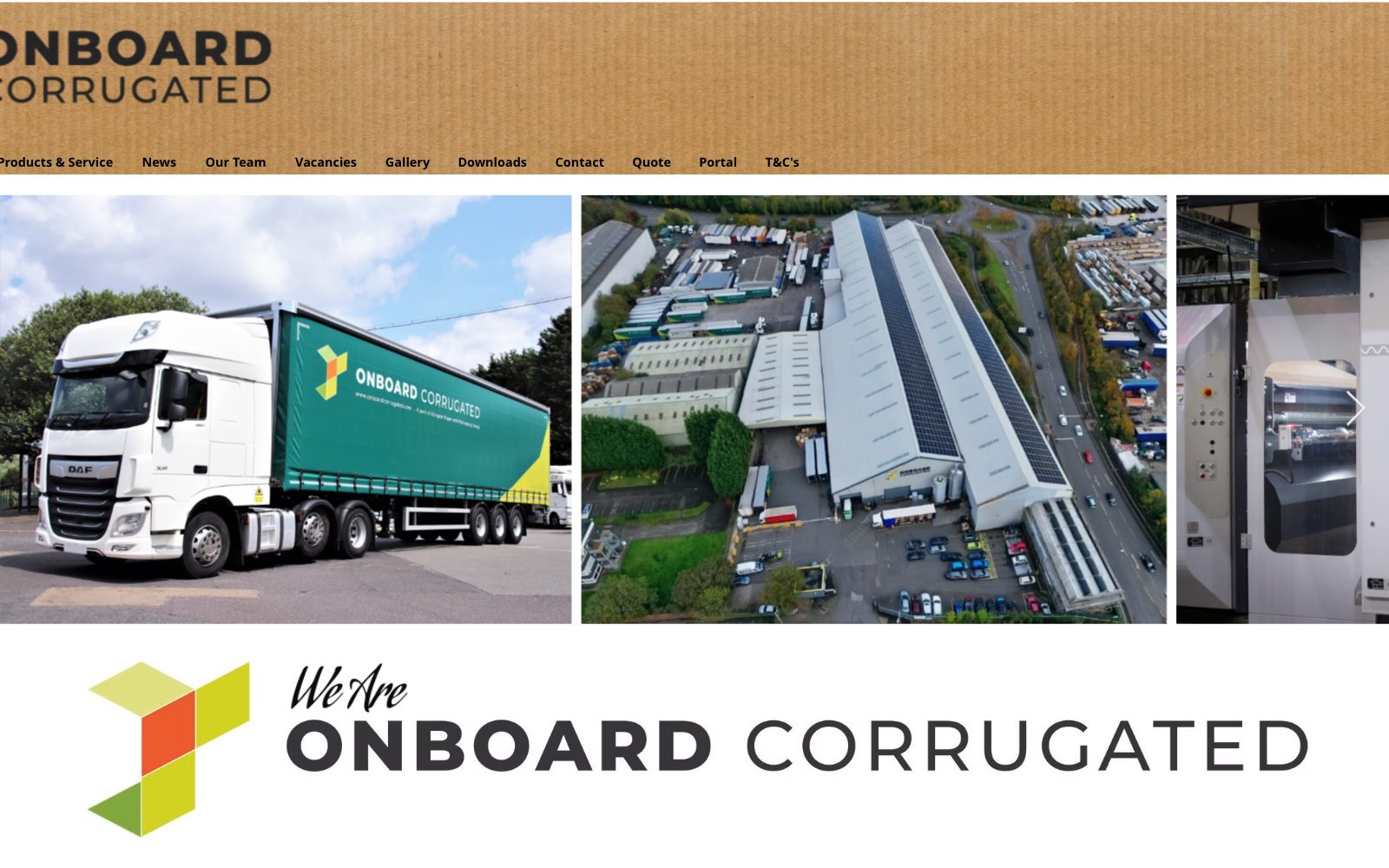
- On the laptop the page is 1714 px wide. The logo starts 175 px past the left edge of the screen, and the first two menu links, Home and About Us, fall outside it.
- The home page has no phone number. The facts a buyer looks for (95 people, two BHS corrugators, ten flutes) start just below the first screen, and 66% of production delivered the next day is only on the Products & Service page, about 2,000 px down.
- The quote form asks for width, length, board grade and quantity, but has no field for the flute.
- Vacancies is a picture and a button to Indeed, and the ISO 14001 page shows an "under construction" picture.
Decisions
Corrugators and delivery first
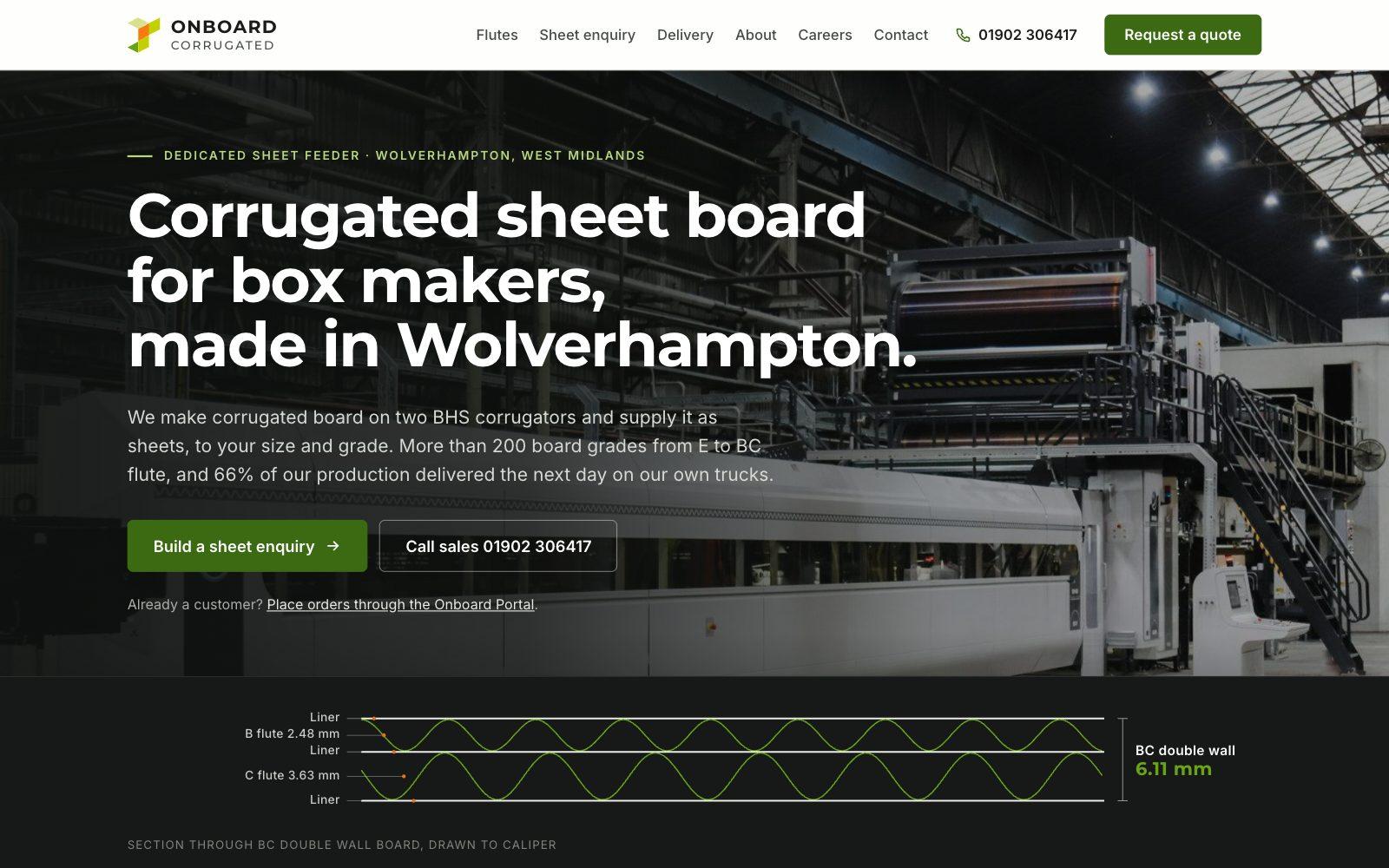
The first screen says what they make, for whom and where, over their own photograph of a BHS corrugator. Below it, a section through BC double wall board draws itself once, to its real 6.11 mm caliper. Under that, six figures from their own pages, from 150 million m² a year to the 144,000 sq ft site, and the phone number sits on the first screen.
Flutes drawn to caliper
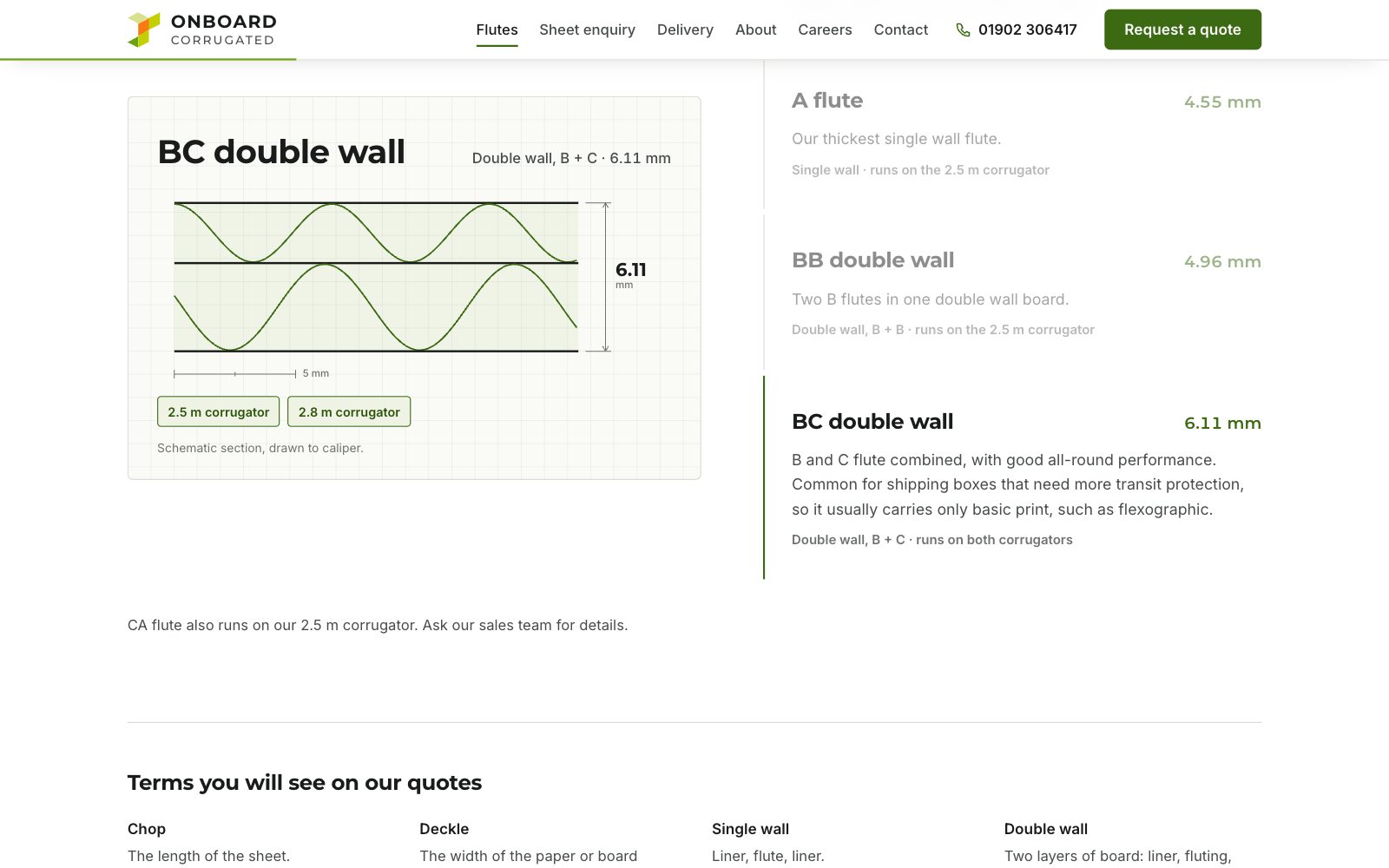
Their Products & Service page lists nine calipers, from 1.16 mm for E flute to 6.11 mm for BC, and flutes per foot for B, C and E. A Python script turns those numbers into drawings, so each section is the right thickness. As the buyer scrolls through the flutes, the drawing panel stays put and shows which corrugator runs each one.
A sheet enquiry that knows the machines
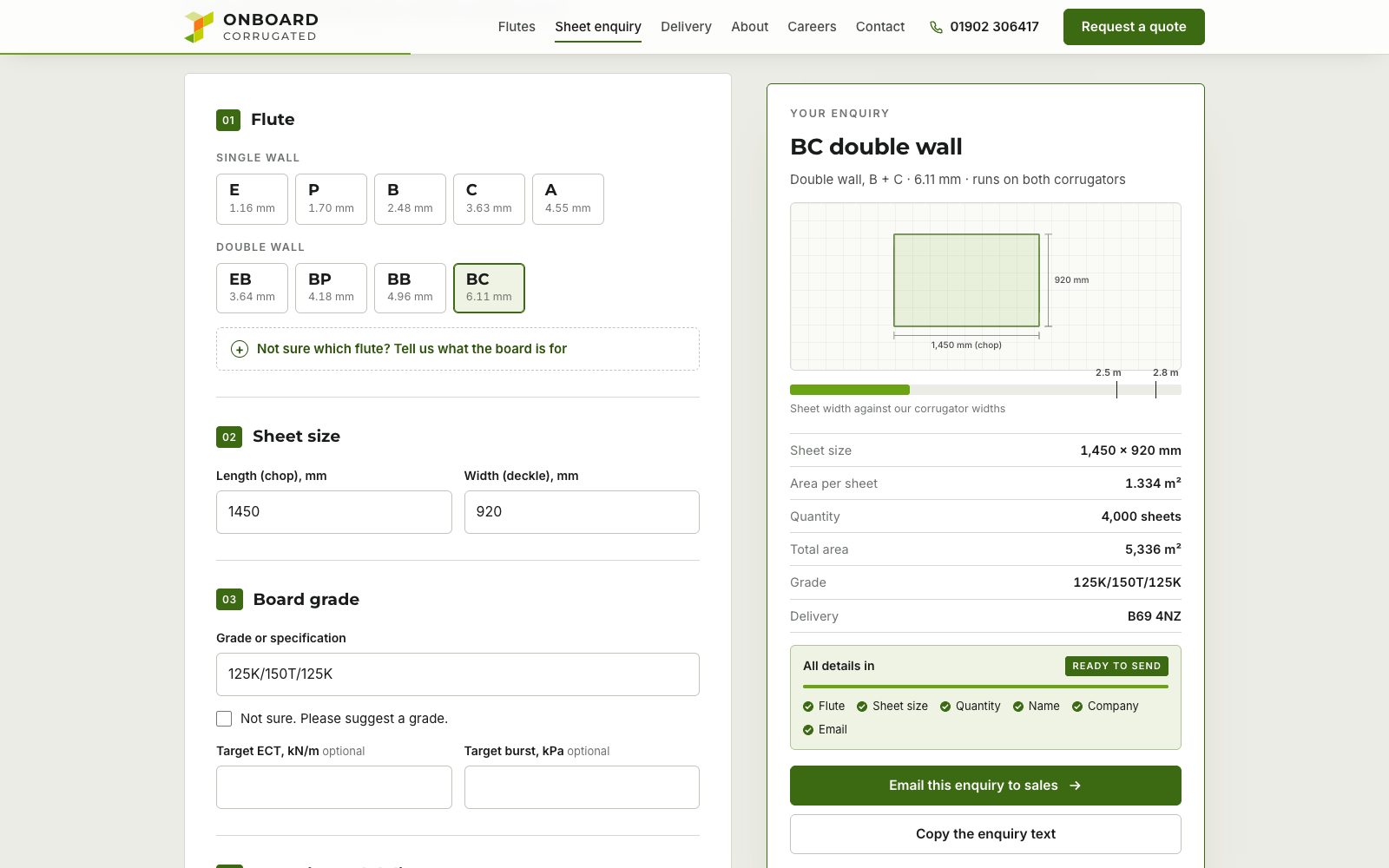
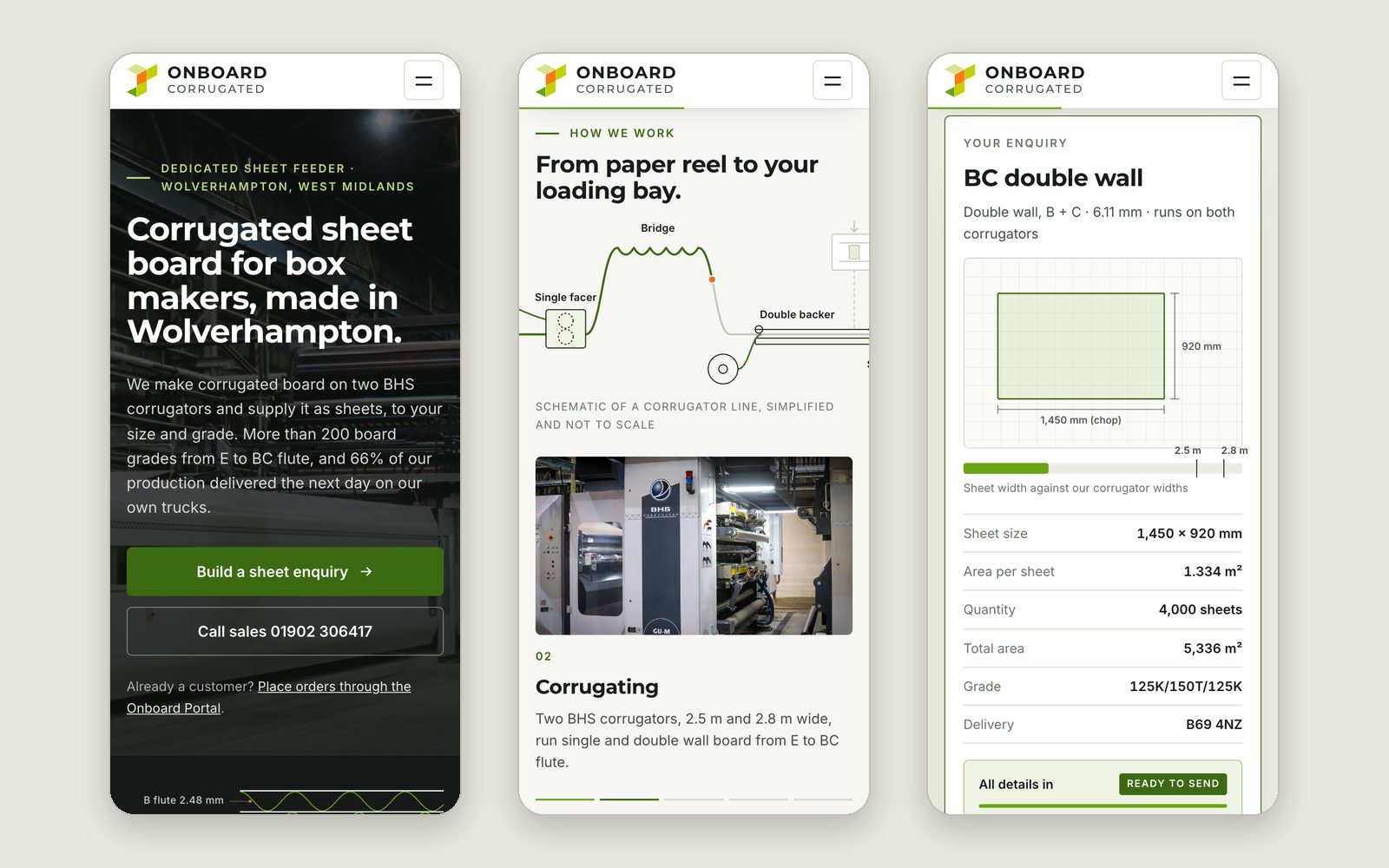
The tool asks for what a planner needs: flute, chop and deckle, grade or a request to suggest one, optional ECT and burst targets, quantity, postcode and EDI. The summary draws the sheet to scale, works out the area and sets the width against 2.5 m and 2.8 m, with a note if the sheet is wider than the corrugator that runs the flute. A short list shows what is missing; once everything is in, the box switches to ready to send and the button opens a filled-in email to sales@onboardcorrugated.com.
From reel to loading bay
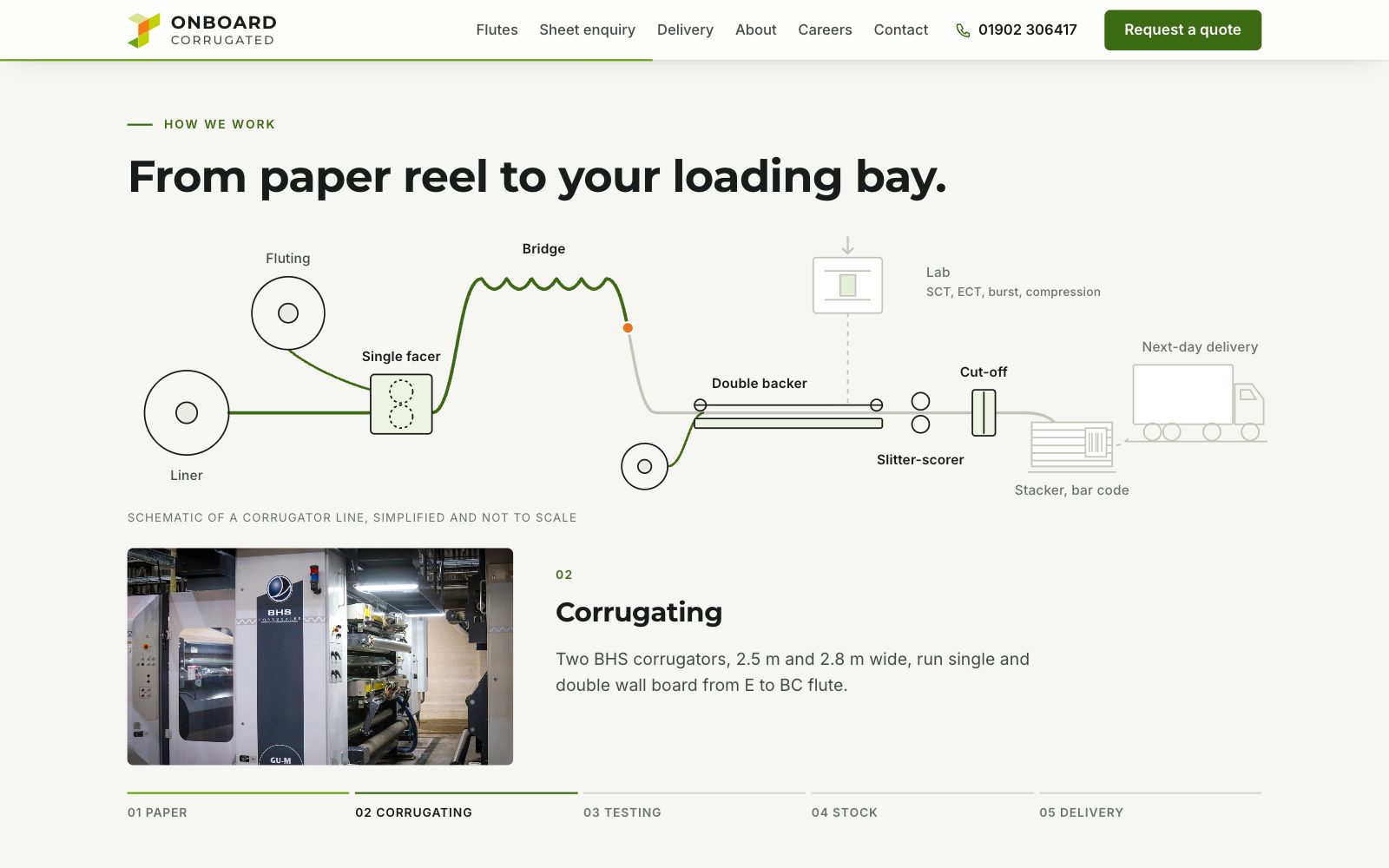
Their five steps, paper, corrugating, testing, stock and delivery, became a line drawing of a corrugator. As the visitor scrolls, the section holds still and the board runs from the reels through the single facer and double backer to the stacker and the truck, while each step's text and photograph change.
Careers and the phone
The three roles from their Indeed page, with the advertised pay, get their own section and an Apply by email button; "no agencies" stays. On a phone the corrugator drawing slides sideways to follow the board, and a bar at the bottom shows the enquiry's flute, size and progress.
How it's built
Static HTML, CSS and JavaScript, with no framework. Reveals are CSS transitions with IntersectionObserver, and a short script maps scroll position to the corrugator's SVG path. There is no server: the enquiry, applications and contact form leave through mailto. Hidden starting states only apply once JavaScript has loaded, so the page reads without it, and reduced motion turns the story into a plain list. The page is noindex, the JSON-LD holds only details from their site, and photographs are resized and load lazily.
What I would do next
With the company I would first check whether the three roles are still open and where applications should go, whether the minimum order is 200 m² (their site says "200m3"), and whether the two testimonials can stay. A real project would send the enquiry without the buyer's email program, redirect the old quote and vacancy pages, and fill the ISO 14001 page.