Mewi
Open the conceptA concept for an electrical supplies shop in Turnhout: both trades on the first screen and a central vacuum system put together in four steps.
Mewi is not my client and did not commission this website. I made the concept on my own initiative from the text and photos on their public website, so every fact on it is theirs.
- Company
- Mewi
- Service
- Concept website and central vacuum system planner
Mewi is an electrical supplies shop in Turnhout with a webshop, mewi-online.be. Their logo names a second trade: central vacuum systems. Customers come for something specific, a switch from a given range or parts for a built-in vacuum, and want to know if Mewi has it and if the shop is open.
What I found
Checked on 14 November 2026, on a laptop and a phone:
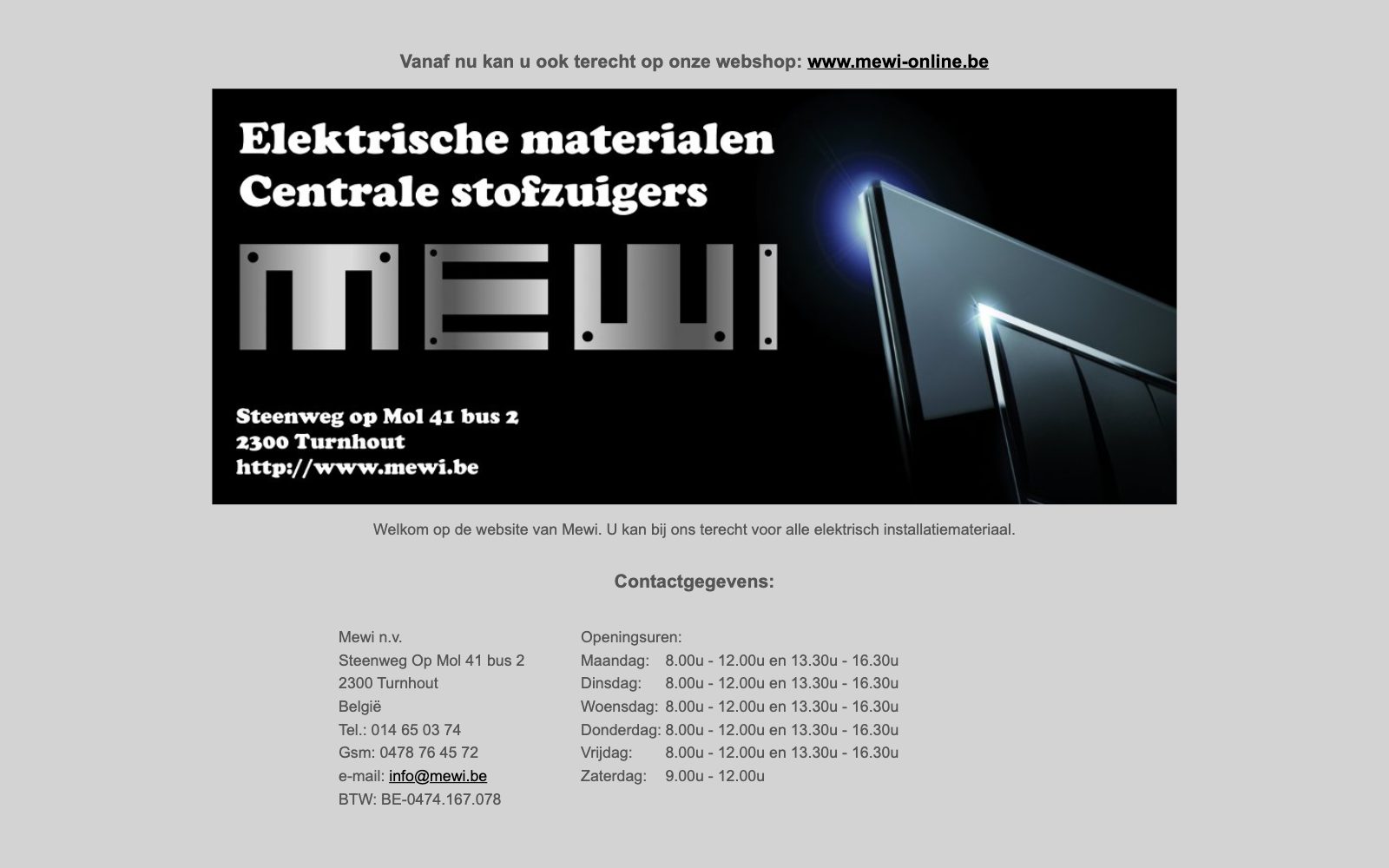
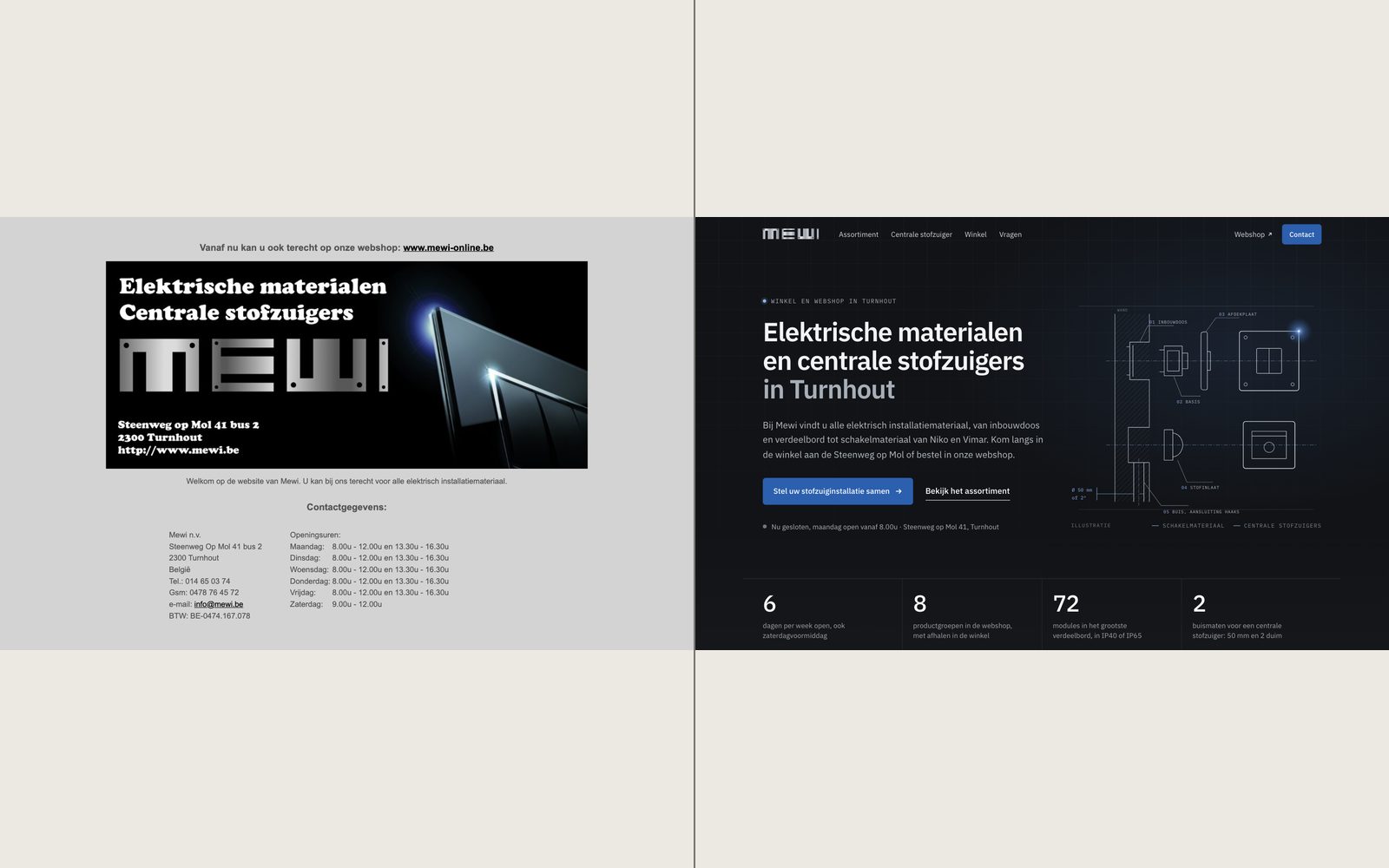
- mewi.be is one page: a webshop link, the logo, the address and opening hours. With no mobile viewport tag, a phone shrinks the 1008 px page to 39 %, leaving text about 6 px high.
- Central vacuums appear only as text inside the logo image, which has no alt text, and in hidden keywords. The readable text names neither them nor the brands, and none of the webshop's eight groups covers them.
- Details on pipes, inlets and units exist only on 2016 mewi.be pages in the web archive. Those addresses now return a 404.
- The phone numbers are plain text, so there is no tap to call. The only links are the webshop and an email address.
Decisions
Both trades on the first screen
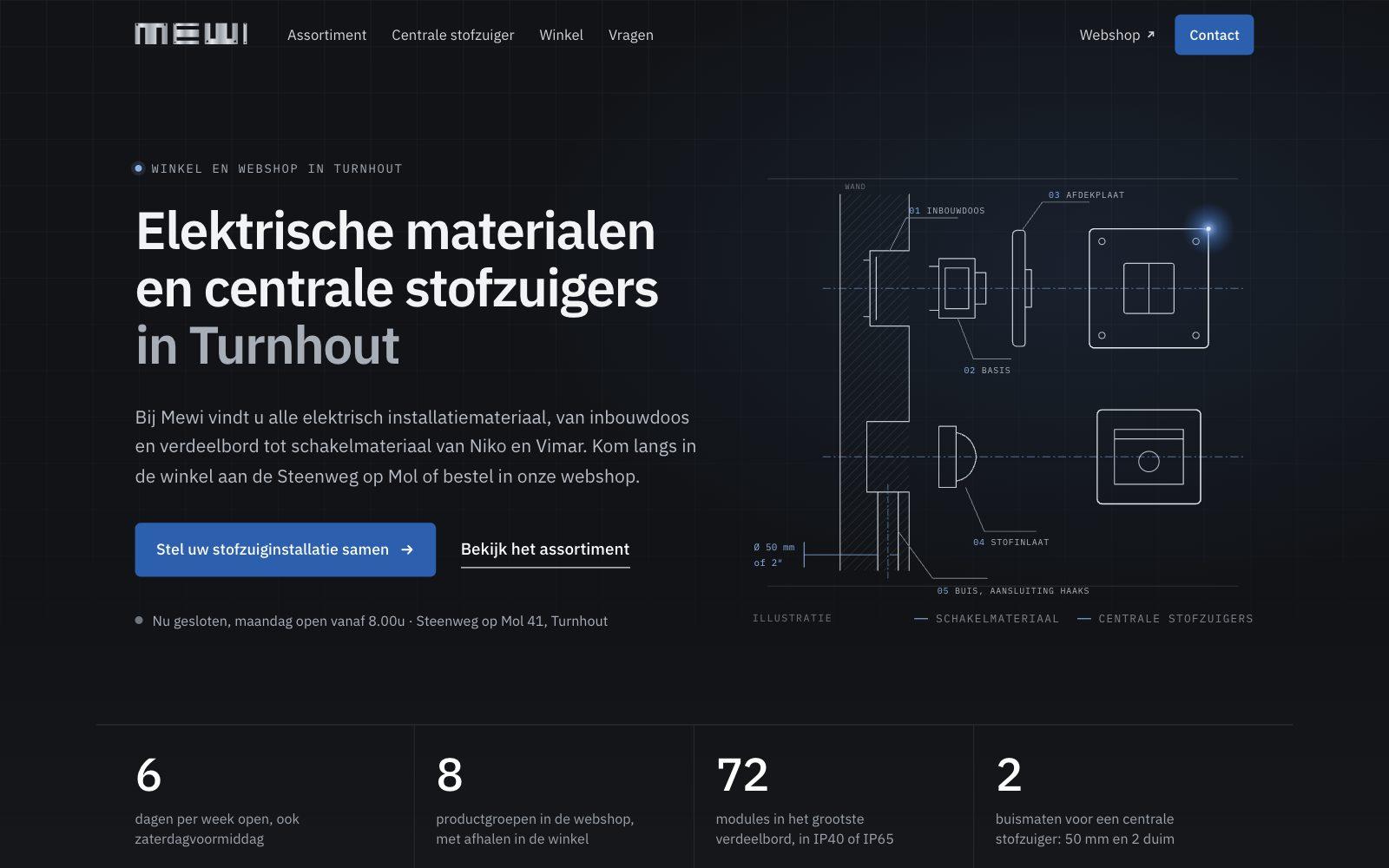
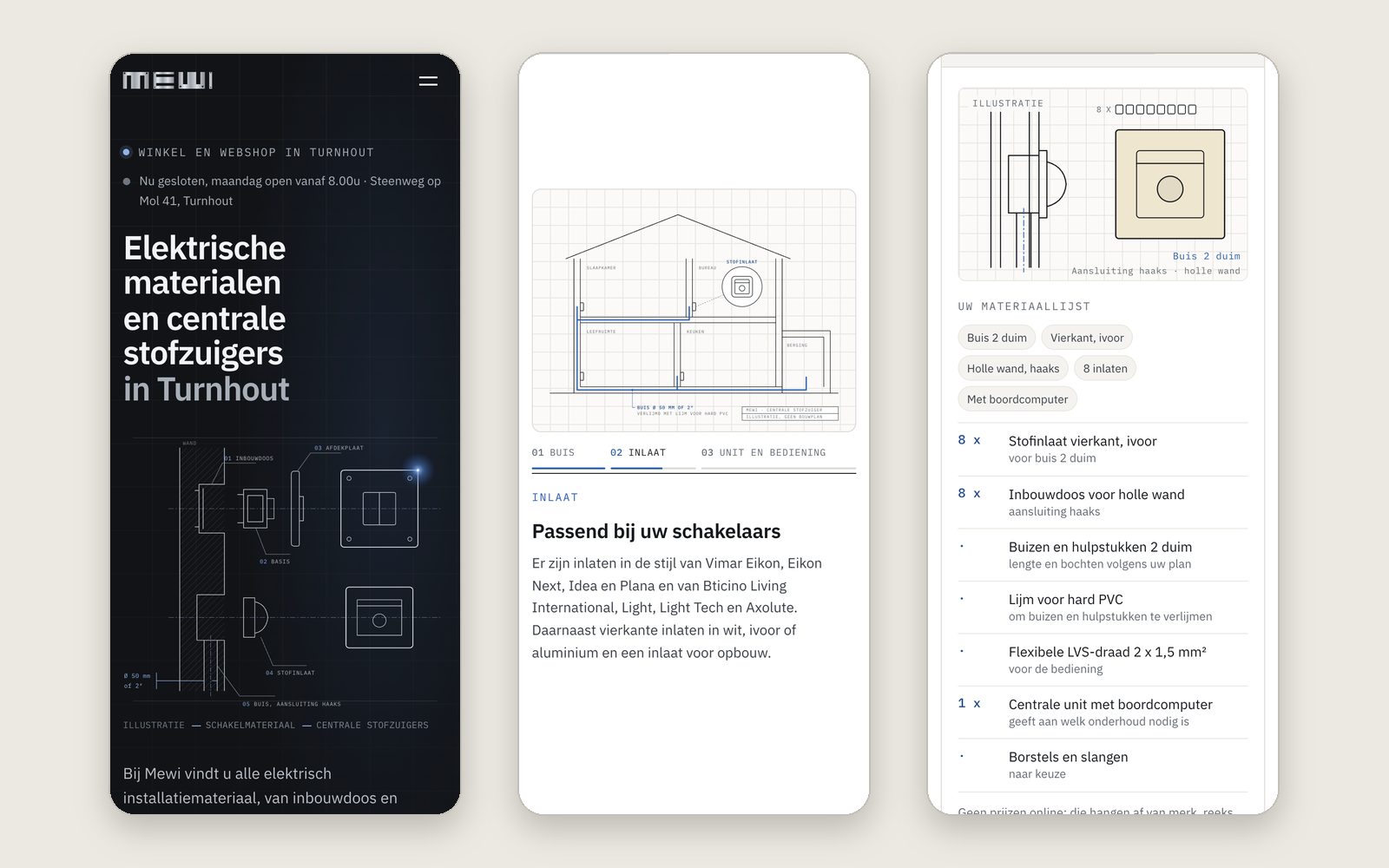
The headline is the line from their logo: "Elektrische materialen en centrale stofzuigers in Turnhout". Beside it, an exploded drawing of a switch and a vacuum inlet in a wall draws itself once, and a blue light comes on at the plate's corner, as on the switch in their logo. Under the buttons the site says whether the shop is open now, from their published hours.
The range in six groups
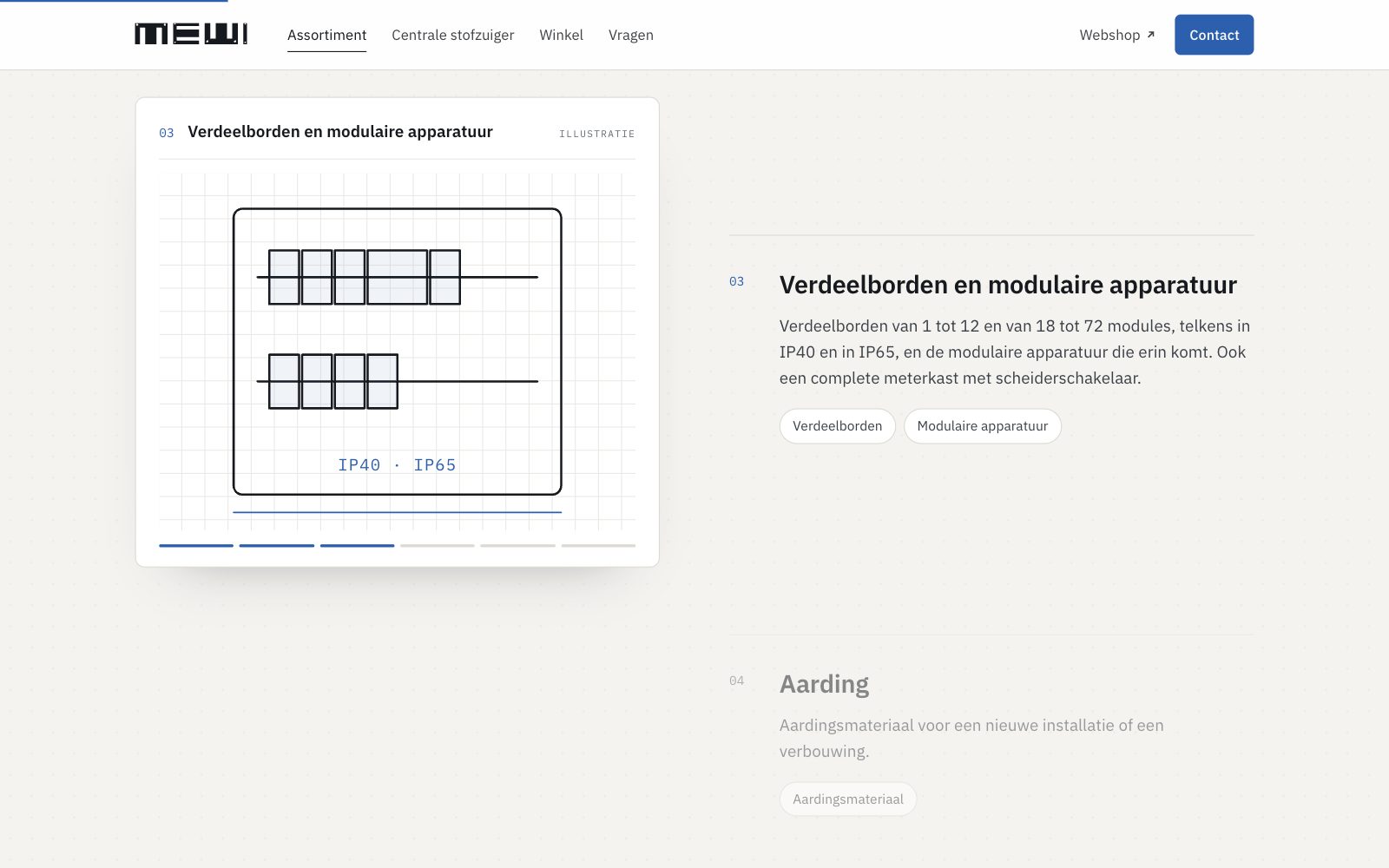
Five groups follow the webshop's categories and link to them; the sixth is central vacuums. A card beside the list redraws itself whenever the group changes. Niko, Vimar and TEM, until now only in the webshop or the hidden keywords, are in the text and a strip below the first screen.
A vacuum system drawn inside a house
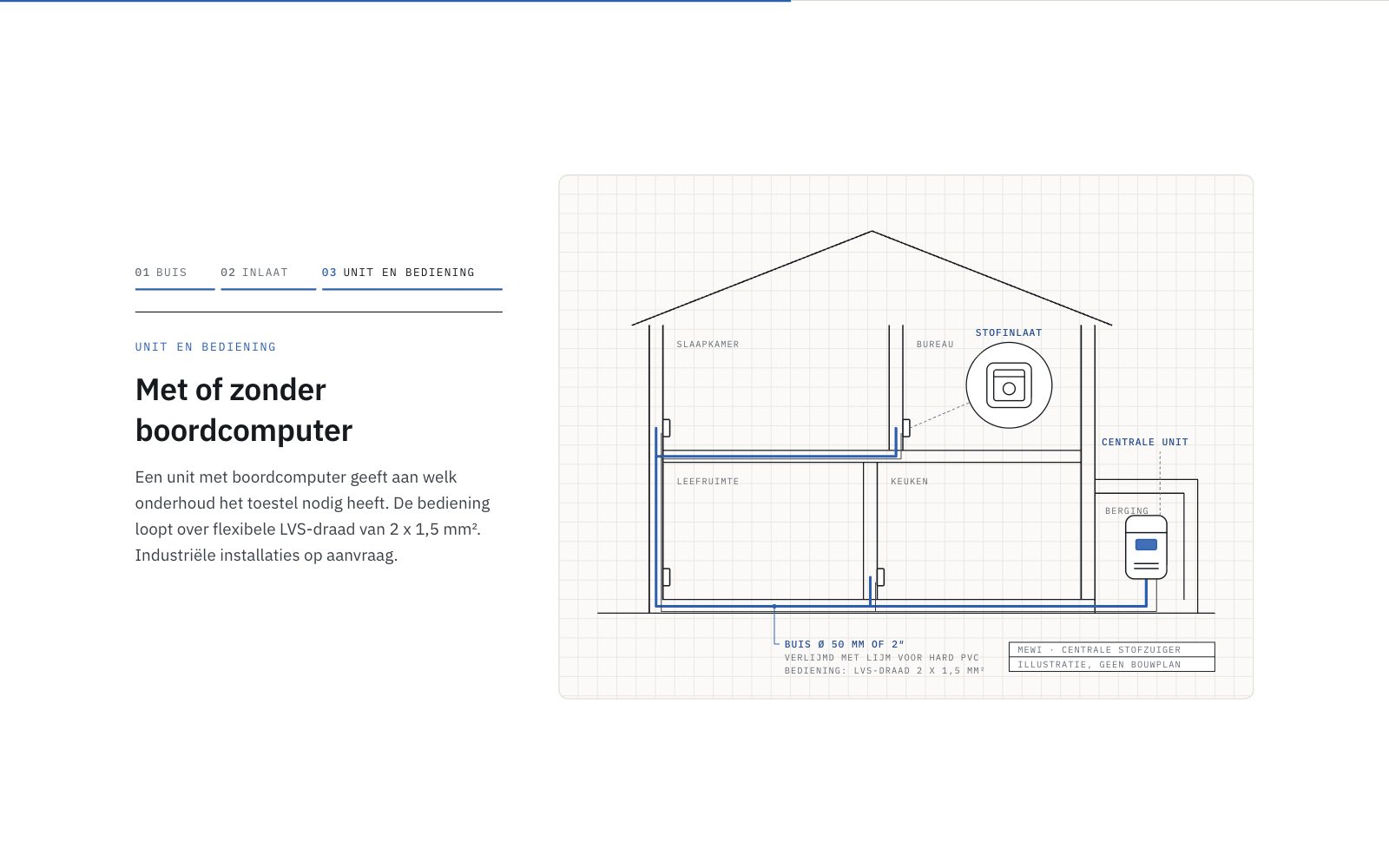
A central vacuum is a system, so I turned three facts from their archived pages, pipe, inlet and unit, into a cross-section of a house. It holds still while the visitor scrolls: pipes run through floor and walls, inlets appear in the rooms, then the unit and its control cable in the storage room. The drawing says it is an illustration, not a plan.
A materials list in four steps
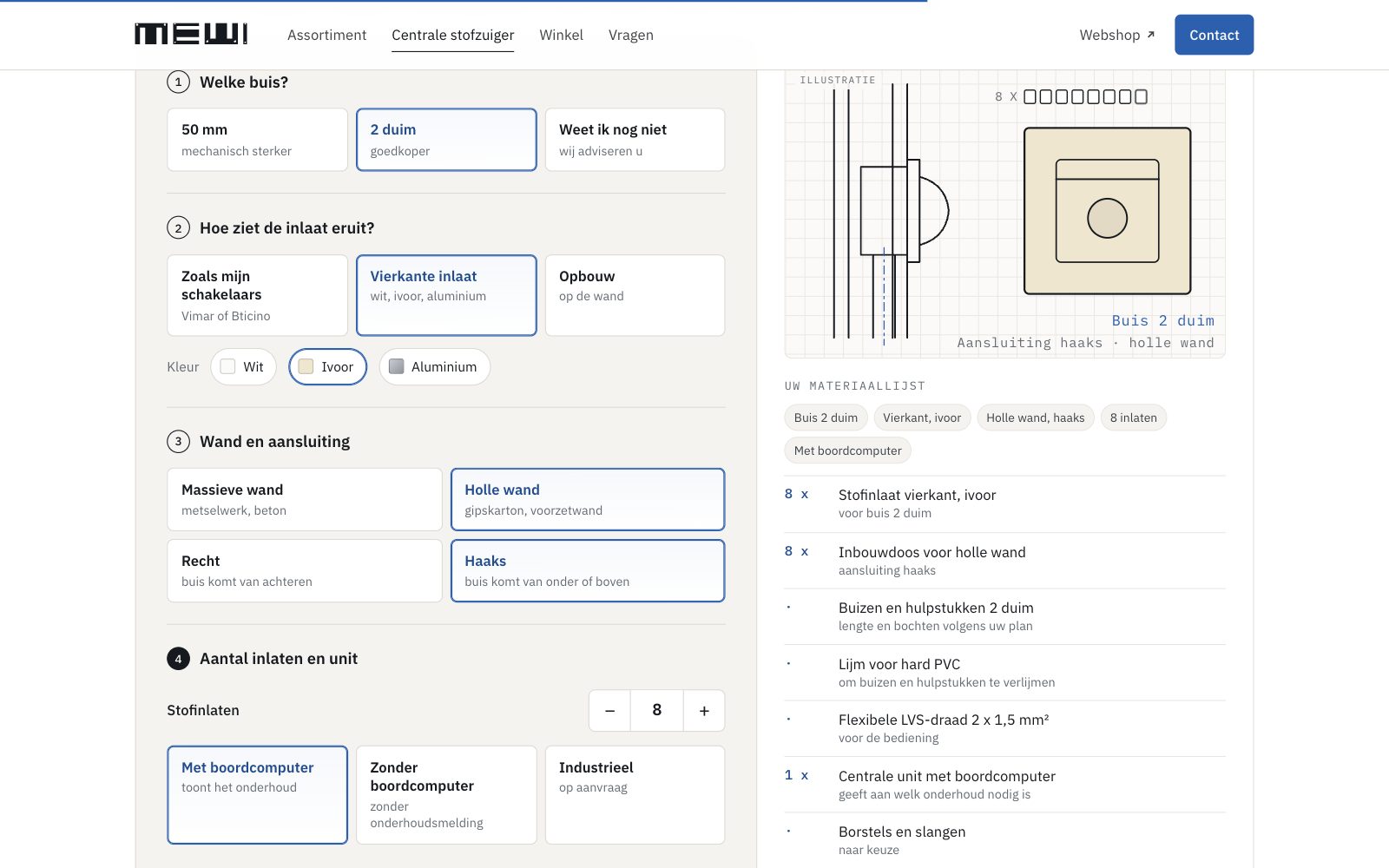
The tool asks what the shop needs: pipe, the inlet (matching a Vimar or Bticino range, square or surface-mounted), the wall and pipe direction, the number of inlets and the unit. As the customer chooses, the drawing, a summary and the list update. No prices, because their site gives none. One click copies the list into the contact form, which says what is missing and when it is ready, and it leaves as an email to info@mewi.be.
Colour, type and the phone
Anthracite and steel come from the logo's metal letters; the only colour is the blue of the light on the switch. On a phone the open status sits above the headline with the drawing below, and in the vacuum section the drawing stays put while the text changes. The site is in Dutch, like the current one.
How it's built
Static HTML, CSS and JavaScript, no framework, hand-written SVG. CSS draws the first screen (stroke-dashoffset), GSAP with ScrollTrigger runs the cross-section and Lenis smooths scrolling. Hidden starting states are set only once JavaScript loads, so without it the page is fully visible and the vacuum story is a list beside the finished drawing. Reduced motion turns movement off. There is no server: the browser builds the list and the enquiry leaves through mailto. The prototype is noindex, its JSON-LD holds only data from their site, and the one photograph, the shop from their own archive, loads as it reaches the screen.
What I would do next
I would first check with Mewi that the 2016 vacuum details still hold, that the 2013 photograph still shows the shop, and whether installers and private customers buy on the same terms. A real project would add a form that sends directly, their own photographs, and links to vacuum parts once they reach the webshop.